Saturday, 17 September 2016

Spinoza, Part 2

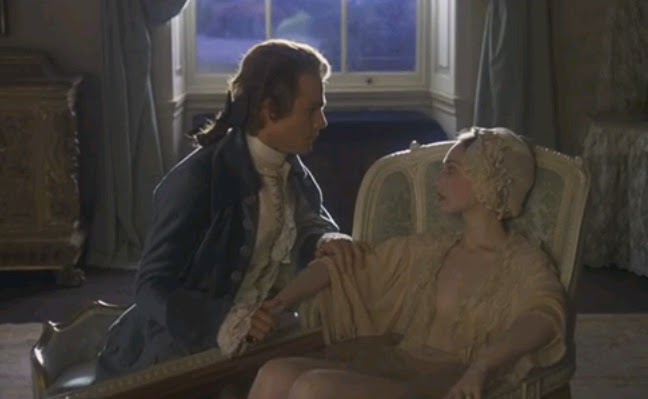
Man in the Universe - a scene from 'Barry Lyndon' (1975).

How can we understand our mind through Spinoza’s teaching? Through his metaphysical speculations, Spinoza went further to provide a mechanistic explanation of the human mind. He believed that when humans behaved rationally, the mind was a self-directed mechanism, because the motivation of humanity was self-preservation. Thus, that is what we mean by ‘selfish’ in the context of Spinoza’s philosophical ideas (not quite like ‘greedy’). The word Spinoza has used was ‘conatus’, also important in British philosopher Thomas Hobbes’ philosophy. Conatus can be defined as the innate inclination of a thing to continue to exist and enhance itself. In the third section of Ethics, Proposition 6, ‘Each thing, as far as it lies in itself, strives to persevere in its being.’ So, Spinoza believed that the ‘will to continue’ is something inside all of us, and it is a force of Nature to strive and go forward, rather than to perish as ashes.

What makes up our mind are that of ideas, and due to the chains of causes and effects, these ideas will be connected as a coherent system, and the result is a mental mechanism present in our mind. The net result of the action of this mental mechanism leads to consciousness. Thus, when we are rational, we are like ‘spiritual automatons’, who work in a mechanistic manner and yet have consciousness, rather than like philosophical zombies or robots. This is Spinoza’s unique take on psychology.

A particular important view regarding the philosophy of mind is Spinoza’s monism. In Ethics, Spinoza did address the ‘Mind-Body Problem’, almost a holy grail for generations of thinkers. While his predecessor, Descartes, took a dualistic view on the mind and body problem, stating that they were two separate substances in the world; Spinoza’s view is known as ‘parallelism’. That suggests mind and body are one and the same thing, and there is no point to separate them or to argue which one is truer than the other one. Spinoza believed that the action of the mind was at the same time with the action of the body – thus parallel in a sense, and so the modes of mind are isomorphic to modes of body.

I have read a nice analogy regarding this mind-body issue in another book, ‘Understanding Rationalism’. In that, the author compares Spinoza’s monism to the development of algebraic geometry. When you have, for example, the equation of a straight line y = mx + c, it has a corresponding graph on the Cartesian plane. The equation and the graph both represent the same thing, so they are one and the same. There is no point to ask whether the graph is realer – in a metaphysical sense – than the equation or vice versa. You can say the equation lives in an algebraic world, and the graph lives in a geometric world, like two parallel universes. Yet the key point is, they are identical to each other. Indeed, it is rather ironic that Descartes, which is coined as the father of modern analytic geometry, has not been able to connect with this rather interesting analogy and instead has proposed a Dualism in the mind-body problem.

Spinoza has illustrated to the readers the real face of the universe. Now, how can one live well in this apparently indifferent universe? Spinoza’s project is to release us from the imprisonments of false assumptions and mis-conceptions, because these are the obstacles that will prevent us from living a more fulfilling life. The ultimate aim of the Spinozistic way is to achieve the intellectual love from God, meaning that one develops a better understanding of oneself and the relation to Nature.

Before that, we have to confront a rather controversial issue - the illusion of free will. This sounds rather counter-intuitive because, for our experiences, we are often free to choose, right? Yet, to Spinoza, the mis-conception about the existence of free will leads to our enslavement and pain. If we are asking the wrong question, how can we reach an insightful answer? For Spinoza, there simply may not have a choice between determinism and free will. The sadness we get from our lives is due to wrong assumptions which are originated from passions – for example, believing there will be a God who will do us justice. Spinoza stated that if we wrestled with all these false impressions, we would never achieve a virtuous life.

Does that mean humanity does not deserve freedom? Spinoza disagreed. Because for him, freedom took a deeper layer of meaning. To be free is to be free of the sentiment, false assumptions and wrong conceptions that will only serve as burdens to one’s way to happiness. To Spinoza, if one can appreciate the working of Nature and be able to go naturally with the flow, they will gain an intellectual fulfillment and find true happiness for their existences. If one can control the passions and view the Nature with awe, they can still be gratified to see that they are part of an elegant and wonderful universe. Spinoza’s God will only award those who are willing to step out from the comfort zone of ignorance and alter their attitudes to see the real world for themselves.


After all, you do not have to agree with Spinoza – he was just one of the many wise men who have contributed significantly to human knowledge. Yet to me, if reading Spinoza will motivate your inquisitive mind to give some real thoughts about the human condition, then I suppose he has succeeded.    

(2/2)

by Ed Law
17/9/2016


Wednesday, 14 September 2016

Spinoza, Part 1


Very recently, I have read a new book about the philosopher Benedict Spinoza, known as ‘The Spiritual Automaton - Spinoza's Science of the Mind’ (ISBN: 9780199675531), by Professor Eugene Marshall. It is a nice updated book about Spinoza’s ideas, and I highly recommend this to anyone who enjoys knowledge. I have always had an intense admiration on Spinoza, and although he was someone who existed like 400 years ago, his brilliant ideas seem to manage to connect well with our age. Therefore I will talk about Spinoza this time.

Upon an examination of a portrait of Spinoza, one can easily develop an impression that Spinoza was a humble, friendly sort of person. Indeed, after he has become a private scholar, he lived quietly in a small room as a lens grinder, and throughout the years developed and wrote his original philosophy. He was known to decline a professorship from a university, because he felt that could compromise his free-thinking status through a private scholarship. Thus, one may assume that Spinoza’s philosophical ideas are about how to be a great guy and so on, right?

Spinoza as a cold rationalist

No! If you read through Spinoza’s philosophy, you will find that to be extremely – cold. What the reassurance you want from Spinoza, he does not give you any. His Magnum opus, ‘Ethics’, a book supposed to show us how to live an ‘ethical’ existence, was written in an abstract and geometrical manner. In Spinoza’s view, there is not a God who comes from another universe, behaves like a Superman, and has a score book to weigh the good and bad of humans and judges who should be punished. God is not a friendly dude, by the way. Spinoza believes that we are all selfish – but he has placed no moral considerations in this thorny word. What he means is that the most important human action is self-preservation, and so a normal person should behave in a self-directed manner. And, for us to live a happy life, Spinoza feels that we do not need religion or sentiment. What we need is an intellectual understanding of our real self and to develop a love of Nature. If this is the real face of Spinoza, then why is he considered inspirational, and why should I celebrate such an apparently heartless blockhead here?

Spinoza’s teachings may sound abstract and cerebral, yet I guess the most important thing to get out from that is to see that his ultimate aim is to encourage us to explore and confront the reality of human existence. To do this, we have to unveil the appearances that have been presented to us, or fed to us, though value judgments, religion, authority, or the so-called ‘common sense’. Spinoza has the faith to see human beings are rational, and because a sense of truthful well-being can be attained in our lives, we first have to understand our places in the universe, and how our minds interact with our surroundings. Spinoza was an academic of incredible integrity – he did not rely on story-telling or rhetoric to convince his readers. Instead, he demonstrated (in a mathematical sense), in a logical and rational manner, the metaphysics of humanity, so that we can work through and see the consequences by ourselves. By defining God, Mind and other important terms, Spinoza led us through a journey of wisdom.

If we ask Spinoza whether he believes in the existence of God or not, he will likely first ask you for a clear definition of God. Because his understanding of ‘God’ is very different from the traditional ‘God’ present in religion. In Spinoza’s words, his God is equivalent to ‘God / Nature’, the slash suggesting the two words are interchangeable. Therefore, Spinoza’s God is an impersonal one, and there is no ‘Daddy’ element at all in his interpretation of the ultimate deity. His God can be seen more as a force of nature, or the order that governs the things in the world. His concept of God is indeed an abstract one.

Over the centuries, philosophers have provided many proofs and discussions on the existence of an ultimate deity. Spinoza, who was among one of these wise men, did believe in the existence of God! Yet, what was most original about his idea is that, first, his conception of God was very different from any of his predecessors – he was considered an atheist by many due to his stunning conception of the ‘Big Boss’. And, in his Magnum opus ‘Ethics’, Part 1, Proposition 11, stands the ultimate statement about God. It is long and detailed, yet it can neatly summarize in 3 words – ‘God Necessarily Exists’. Curiously, it is the central word, ‘necessarily’, that is the most important and defines Spinoza’s thoughts. Spinoza believes that in a rational universe, things happen by necessity, thus reality is constructed through a chain of causes and effects.

What can Spinoza’s God, which is also equated with Nature, offer to humanity? Spinoza’s naturalistic conception of God shows us that God is not a transcendent being  - that means it does not come from another realm, like the Platonic forms, and not inaccessible like those cases. Rather, it is immanent, meaning that it is in ourselves, it is part of our world. Of course, that seems to strike with Nietzsche’s outlook in general. For both Spinoza and Nietzsche, when one needs to solve a problem of human nature, there is no point to ask for God’s help from another world. Rather, all the answers can be found ‘in this world’. Therefore, for Spinoza, humanity is part of nature – and to appreciate this position in the universe is essential before we continue to understand the working of our minds and the way to enhance our well-being through our existences.

Two further implications are evident from Spinoza’s conception of the universe. First, it suggests the world is operating in a deterministic manner, which is also in tune in the contemporary scientific development such as Cartesian or Newtonian mechanics. Because things happen by necessity, so the actions are linked through chains of defined causes and effects. And, it also suggests the train of action is moving on a single route – there are no other possible ways to go further. Spinoza’s God is not anthropomorphic or benevolent - it is a deterministic system that cannot feel or commit to any sort of sentiment.


Second, Spinoza’s philosophy is mechanical in nature. Those the causality of events, the universe operates as a mechanism, just like the demonstration of mathematical concepts, when they are linked by necessity. Spinoza was considered as one of the mechanical philosophers of the 17th century, though he has made himself clear that he was not a materialist or an atomist, for which a number of other mechanical philosophers, such as Boyle and Hobbes, were associated with.

(1/2)

by Ed Law
14/9/2016


Saturday, 10 September 2016

Barry Lyndon


The tableau of human existence often resembles a large chessboard. All of us, who are engaged in a game of survival, are pawn pieces that can be eliminated due to the slightest lapse of judgment. In such a brutal battleground, we often have to submit to the most unexpected circumstances and then perish amidst the complex web of causes and effects. Yet, how often can we understand the secrets behind all these human experience? Is it possible that we are controlled by a sort of driving force, that we are inaccessible to and are often beyond our control? After all, can we detach ourselves from the subjective feelings that have always entrapped us and achieve a higher level of understanding regarding our humanistic existence? If you are fascinated by the above questions, then the film I am discussing at length in the coming weeks is the one for you – Stanley Kubrick’s Barry Lyndon (1975) !


‘Barry Lyndon’, a 18th century period drama, was one of Kubrick’s major efforts at the 1970s. The script was based on W. M. Thackeray’s novel ‘The luck of Barry Lyndon’, though the perspective and the plot elements were very different in Kubrick's version, giving the film a unique charisma of its own. ‘Barry Lyndon’ is important because it is a surrogate for Kubrick’s abandoned project, ‘Napoleon’. All the efforts and preparations for ‘Napoleon’ would be fully realized in ‘Barry Lyndon’, from an insistence on natural light photography to the authenticity for the details in terms of plot, set design and costume. Given the available materials that have been passed on to the later generations, one can appreciate that ‘Napoleon’ would likely to be Kubrick’s most ambitious project, and this could also be felt when one was viewing the abandoned project’s cousin, ‘Barry Lyndon’.


At an epic length of 3 hours, the 1975 film chronicled the rise and fall of a social climber, Barry Lyndon (starring Ryan O’Neal), and the story also shed lights on many issues regarding human existence. Like many other Kubrick films, ‘Barry Lyndon’ received mixed reviews upon its initial release, and performed poorly at the box office. The film still managed to receive 4 Oscars, and Kubrick was nominated for Best Picture, Director and Adapted Screenplay. Nevertheless, ‘Barry Lyndon’ has stood the test of time, and more people have become aware of the film over the years, and now it is considered as one of Kubrick’s towering achievement.


Let me be frank – I am certainly not a ‘special species’ who has a stunning endurance for apparently ‘boring’ materials. When I first watched ‘Barry Lyndon’ in my teenage years, like many viewers, I felt the film to be extremely slow and boring. Yet, the film has certainly left an intense impression on me, and many of the filmic images in the film have lingered long in my mind since my first viewing of the film. I believe my first impression in ‘Barry Lyndon’ was caused by a thirst for sensation or sentiment in my early years of watching films, and ‘Barry Lyndon’ seemed to offer the viewers neither of these ‘emotional pornography’. When I have grown up, I have been able to realize the futility of fake sentiment and have started to think deeper into the many issues regarding human nature. Thus, I decided to give this boring film another chance. This time, it was a completely different experience, and the numerous insightful observations ‘Barry Lyndon’ has offered represented great inspirations for me to probe into the questions regarding  the human condition. Now, ‘Barry Lyndon’ has an extremely special place in my heart. It is one of the only three films that have significantly influenced my worldview, the way I look at the world. The other 2 contenders are iconic in their own ways, too – Akira Kurosawa’s ‘Rashomon’ and Kubrick’s ‘2001: A Space Odyssey’.


I have the strong commitment that, as a faithful follower of Stanley Kubrick, I have to recommend ‘Barry Lyndon’ to you, for both practical and personal reasons. The major reasons are because the film is far less known when it is compared to the other late Kubrick films, and more important, it is an intensely misunderstood film. The two issues seem to intertwine in a curious way. The reason why ‘Barry Lyndon’ is a lesser known Kubrick film is likely because the audience are misled to believe that the film is ‘cold’, ‘boring’, ‘clinical’, and ‘slow’ – some of the labels splattered by certain ‘critics’, for whom I doubt whether they have the patience to finish off the whole film and then make a fair comment. The comments from these ‘walk-out-at-20-minutes’ personalities are abundant on the web, and I suppose the wrong message have been passed on as a result.


Which, I think, is rather paradoxical. ‘Barry Lyndon’ is a very subtle film, because the film does not have heightened characters like those in ‘2001’, ‘A Clockwork Orange’ or ‘The Shining’. That suggests the film does not have a Wow factor that makes one jump out of the seat. Indeed, the characters we find in ‘Barry Lyndon’ are normal people, who are desperate for survival in a hostile world. Many of these characters are dark, hypocritical and negative, yet they are very realistic – they are the archetypes who are timeless and can be easily identified in our world. Many audiences can be able to identify with the protagonist, Barry, and it should not be surprising that our world is full of Barry Lyndons – social climber, opportunist, amoralist. On the other hand, ‘Barry Lyndon’ has some of the most compassionate and emotional moments in any Kubrick films, and I believe those detractors have likely left the cinema at those moments, so they are oblivious to those scenes. That is why I think it is rather strange, because ‘Barry Lyndon’ is a Kubrick film which is most relevant to the human experience, and I suppose any audience who are inquisitive about humanity should be interested in such a film. To me, ‘Barry Lyndon’ is possibly the most Kubrickian film of all – it is in the film when Kubrick expresses his insightful views about humanity and showcases his unique approaches to film art. The secret to appreciate ‘Barry Lyndon’ is patience and an open mind. ‘Barry Lyndon’ is a film that rewards multiple viewings, because one viewing is simply not enough to take in all the stunning filmic images and themes. If you have the patience to engage with Kubrick’s stunning period piece, you will find ‘Barry Lyndon’ a calm and unsentimental film, yet ripen with witty black humor, surprising and awe-inspiring twists, rich human insights and genuine emotions.


A brief sketch on the story. The plot follows a two part structure, detailing the rise and fall of a layman  in the 18th century, known as Redmond Barry (Ryan O’Neal). An omniscient narrator is also present to provide observations and some of the dark and cynical humor. From a humble beginning, Barry longed to have a social status and a true love. Barry was just a chess piece on the enormous chessboard of humanity. After killing an opponent in a duel for passion, Barry was forced into exile, only to learn later that, his opponent faked his death so that the girl’s family could chase Barry away from town, and she could marry Barry’s opponent, who was richer and would lead to a better economic prospect. Circumstances and the Seven Years’ War drove Barry into different fronts, and his solace was a warm-hearted family friend, Captain Grogan. Yet when Grogan was killed in a skirmish in the most circumstantial way, Barry realized that he had to be ruthless and took any chances he encountered, if he still wanted to stay in the game and prospered in such a hopeless universe. Eventually, luck knocked on Barry’s door, when Barry courted and eventually married Sir Charles Lyndon’s wife, Lady Harriet Lyndon -of course, after Sir Charles died untimely from a heart attack.  Barry became Barry Lyndon, like some sort of a double existence. But his dark side eventually caught up with his bright future, when he estranged the timid Lady Lyndon, amassed financial problems and ignited the wrath of his stepson, Lord Bullingdon. Would fate spare Barry Lyndon, and would Barry lead to a happy end and actualize his life? Wait a minute, didn’t the narrator tell us the answer halfway through the film ...?!


For the time being, if you are interested in Stanley Kubrick and yet have not watched ‘Barry Lyndon’ before, just give it a shot!


by Ed Law
10/9/2016

Film Analysis - 69


Saturday, 3 September 2016

Through A Glass Darkly


Ingmar Bergman’s ‘Through a Glass Darkly’ (1961) is considered as a member of a trilogy of films, which also includes ‘Winter Light’ (1963) and ‘The Silence’ (1963). While I plan to discuss all 3 films as a whole in a later article, as they all possess a common theme on religion and the related spiritual questions, I am in particular fascinated with ‘Through a Glass Darkly’ as it also involves psychological themes. That will be the focus of this article.

Influenced by the chamber plays of Strindberg, ‘Through A Glass Darkly’ possesses a 3-act structure and the setting is extremely claustrophobic The scenes are minimalist in the sense that there are only four major characters in the film, and, while it may sound a bit of a cliché, the characters act as mirrors for each other. The intensity of the story rests on the claustrophobic environment and also the intimate interactions for the limited number of characters. On the other hand, the story takes place on a defined place and a defined period of time – a 24-hour period, which reminds me of Aristotle’s Poetics – and his criteria on the unity of drama. This is also an attribute much treasured by Andrei Tarkovsky’s later work.

Four family members took a vacation in a secluded island, but in a Bergman film, it was unlikely to be a happy experience. First, the schizophrenic Karin was just out from an asylum. His father, David, was not too content, neither. He was a novelist suffering from a writer’s block. And then there was Karin’s husband, Martin; and Karin’s younger brother, Minus, who did not have a great relationship with his father David. Karin’s delusions (or genuine spiritual experience) led her to believe that God was calling her; and David was desperate to have progress in his work by writing about Karin’s plight as the inspiration. Martin was not too happy about this. On the other hand, Karin insisted that her experience with God was real and she pressed responsibilities of everything, including her misconduct with his brother Minus, as callings from God. Frustrated by the fragmented experiences that were tormenting her psyche, Karin asked for permission to return to the asylum, before stating one final time that she has seen God coming and ‘God is an evil-faced spider, and his eyes are cold and calm’ - as it was only a spider which emerged from the place where she believed God would have emerged. Karin was returned to the hospital by Martin, and Minus finally had a real conservation with his father, and they both knew they had the chance to reconcile.

The minimal number and intimacy of the characters suggested that each of them could serve as mirrors for the others. While these reflections were not objective representations of the true affairs, they could at least serve as a motivation for introspection, and also served as a viewpoint for the various characters to ponder on their own personalities. Bergman’s faces are the mirrors for the characters and the audience alike – it is the gesture to invite all of us to confront our true nature.

Bergman, like Robert Bresson and Carl Theodor Dreyer, could be all considered as ‘spiritual filmmakers’. Yet in Bergman’s work, he has often been skeptical about the existence of God. Karin’s spiritual experience in the attic was questionable, as Bergman has not indicated to the viewers whether her hearing from God was a genuine experience or just clinical dementia. This has led me to draw parallel to the situation of Joan of Arc, for which Bresson and Dreyer have made stunning films about; and I have also talked about ‘The Passion of Joan of Arc’ in the past articles. Many subsequent academics have questioned the authenticity of Joan of Arc’s spiritual experience, suggesting what she has believed to the ‘voice of God’ could just be her schizophrenic condition. So, the call to protect her country may after all be a clinical delusion! Certainly, these theories are all speculations because that are no ways to verify these hypotheses empirically. Nevertheless, this serves to illustrate the complexity of psychological issues, and the interplay between the spiritual and psychological dimensions of the human condition.

by Ed Law
3/9/2016

Film Analysis


Saturday, 27 August 2016

Persona


‘Persona’ (1966) is one of Ingmar Bergman’s most iconic achievements. The film possesses some of the most powerful filmic images that have ever emerged from the medium, and the style and theme presented in this piece of great European art cinema have inspired so many later filmmakers. This black-and-white film is confrontational, and it has a starkness that reminds me of Hiroshi Teshigahara’s ‘Woman in the Dunes’ (1964). On the other hand, it also reminds me of ‘2001: A Space Odyssey’ (1968), as both films pose questions rather than offering answers. ‘Persona’ is a total mystery, and there is simply not one unifying interpretation regarding what it is about. You do not go to Bergman or Kubrick and ask them what the movies mean – it is you who are supposed to connect and understand these masterpieces in your personal way.

The story of Persona is indeed quite simple. Elisabet Vogler was a theatre actress, who has suddenly become mute during a stage performance. So, a nurse called Alma was called in to take care of her, and the majority of the story revolved around their intimate interactions. Alma talked to the mute Elisabet throughout the film, and in most cases Elisabet did not response in any verbal means. Yet, as the story progressed, all lines of divisions were blurred. Past and present were linked up, dream and reality were no longer clear, two faces seemed to merge into one...

Bergman’s Masks

The word ‘persona’, which is derived from a Latin origin, means the masks that are worn by actors when they are performing on a stage. Isn’t life a drama after all? We all wear various masks when we interact with others. We present ourselves to the others as a certain persona, and too often, we hide our true selves behind the curtain. What is even more depressing, however, is that we often do not have the courage to face our real selves. The theme of mask and façade is prevalent also in Jean Renoir’s films – from ‘The Grand Illusion’ to ‘The Rules of the Game’. Renoir firmly believed that, only by looking beyond the façade and tearing off the masks, one could finally see the true face of humanity.

Why do we have to hide behind these false personas and exist as if we are theatre performers? To Bergman, we do have quite a lot to hide. We all have a lot of problems and angst to confront, and when we start to consider the meaning of life, we are exposed to an emptiness and loneliness for which the implications are often tough to take in. The ennui and emptiness of modern existence is also a major theme in Michelangelo Antonioni’s films, and it should not be surprising that both Bergman and Antonioni’s most productive periods are both in the 1950s / 1960s. To repress these hard feelings, we desire to run away from all these intimate problems and long to play another easier role, through the undertaking of another persona.

The fun of acting, however, is hard to sustain. In the film, Elisabet suddenly broke down during a stage performance and ceased to speak anymore after that. The breaking point represented the dissonance between her stage persona – or in a more metaphoric way – the persona she was pretending in real life – and her truest inner self. It was the massive conflict of her true and assumed self that made her aware of her existential problems. Her powerful response was that of silence - this was her statement that she did not want to play this assumed role anymore.

The axis of turning

In Bergman’s films, turning is one of the most important and symbolic gestures. In many cases, it is the turning away that represents the most painful experience for the characters. Turning away is to run away from problems, relationships, and human interactions. That explains why Bergman’s faces are his most resourceful motifs for his work. The movements and gestures of the faces very much convey the interactions of the characters, and also symbolize whether they are willing to commit or not.

In Persona, Elisabet has been trying to run away. She was mute most of the time, and she did not response to any of Alma’s questions. Alma served to confront Elisabet, to ask her questions about her past experiences. Alma’s challenges invited Elisabet to confront her true self, and to add to that, the stunning close-up of faces also invited the audience to examine themselves. Elisabet, like any other characters in Bergman’s films, could not run away from her problems. She might be mute for no sensible reasons, yet the true voice in her mind would not cease. The intensity of the film was contributed from the two great actresses, Bibi Andersson and Liv Ullmann. In most of the film, there were only the two of them performing, and the claustrophobic intimacy only added to the intensity and the psychological thrill of the resulting masterpiece.

Offering a helping hand

Bergman’s films often deal with existentialism, and the journey to find one’s meaning of existence is often a lonely one. I feel there is an optimistic aspect in many of Bergman’s bleak pictures – the company of someone who is willing to give a hand. The most powerful ‘face’ scenes in Bergman’s films often consist of two faces – with someone who is willing to ask questions and to inspire. It is the presence of an ‘other’ who will motivate you to look beyond the surface and give you the courage to face the spiritual sickness, which in Bergman’s view, is far more problematic than any physical sickness that has appeared in this world.

by Ed Law
27/8/2016

Film Analysis


Monday, 22 August 2016

Kubrick: Napoleon, Part 2 - The Scarlet Waltz


Depiction of a Napoleonic Battle.

'What's the difference? It's all food. This is how Napoleon used to eat.'
-Stanley Kubrick allegedly to actor Malcolm McDowell, when the latter asked why Kubrick ate ice cream at the same time as his main course steak, at a dinner meeting during the pre-production of 'A Clockwork Orange'.

Expecting to be filmed and released after ‘2001: A Space Odyssey’, ‘Napoleon’ stood at the era when Stanley Kubrick’s films were the most innovative and vibrant. ‘Napoleon’ could be the most Kubrickian film of all, and it was not only because of the style and themes that would be presented in the unfinished work. Experiencing ‘Napoleon’ would be like viewing Kubrick in action – observing his approach to challenging filmmaking issues and understanding how he devised ingenious ideas to solve the numerous problems during the process of making a film.  
  
What made Napoleon ‘Kubrickian’?

Kubrick has described the Napoleonic Wars as ‘lethal ballets’. He could perceive the analogy between the heavily choreographed dance numbers and the large scale battles in Europe at Napoleon’s times. Napoleonic Wars had the legacy of innovations in military weapons, enlarged scope, and the ingenious or even elegant applications of strategies. If you have seen any paintings regarding Napoleonic Wars before, you should most likely notice an aesthetic elegance of these bloody encounters. Dressed in differently colored military suits, the large number of troops moved, or literally flowed, slowly through a vast natural landscape. Every strategy, leading to a very specific movement or turn, was so dynamic that even the gunfire has not started, these preludes to the bloody battle could already raise any audience with awe.

Kubrick has always understood that, even for the simplest movement, if it was filmed in a very vibrant and dynamic way, and added with the relevant use of music and other filmic techniques, could give rise to a lyrical and rhythmic outcome as stunning as great music. Kubrick has always felt that image was his prime concern when he made a film, rather than dialogue or narrative. It was through this firm belief that gave him the courage to make something as abstract and subtle as ‘2001: A Space Odyssey’. How can a few flowing spacecrafts contribute to something we now call ‘art’? That is Kubrick’s signature touch- the way he staged the slowly moving Ferris wheel and the space station, the color tone he has employed and his inclusion of ‘The Blue Danube’ throughout the sequence. It was the mélange of all these parts that gave the audience an extraordinary impression they have never experienced before, and thus provided the viewers with the feel of an ‘odyssey’. It was Kubrick’s musical, rather than narrative, treatment of the scene that would lead to his famed signature style.

With this approach in mind, we can try to speculate how Kubrick would have approached the battle scenes in ‘Napoleon’. Imagine an extreme long shot, where an aerial view could show the outline of the battleground. The large number of troops from opposing sides, in different colored suits, moved almost like patches amidst the greenness of the natural landscape, or, in the case of the Russian battle, the whiteness of the snow. The dynamic formations and dissolution of the various troops addressed by the interactions and changes in strategies throughout the duration of the battle, and the ingenious arrangements and configurations of the forces, the wisdom behind these military ideas could be conveyed to the audience through narration or clear descriptions. Nevertheless, it was the vibrant color, lyrical movements, and dynamics that would heighten the visual sensations of the audience the most and immediate, and this was the aspect that was guaranteed in any film from Kubrick. The slow-paced mobilization of the troops, the turn of direction for the massive army, would make it as elegant as a Waltz. As Kubrick has succinctly stated in an interview, the aesthetic brilliance of these battles did not require someone with a military mind to understand, an ordinary viewer could easily feel the elegance through simple cinematic images. Kubrick drew a nice analogy that, if one could appreciate the beauty of a symphony or something mathematical like the Fibonacci sequence, they would be moved by the heightened and dynamic images from his ‘Napoleon’ film.

Now, some readers may sense a tension between style and substance here. If Kubrick was committed to explain to the audience objectively about the details of the execution of the battles, would his stylized signature approach divert from the objective truths he was trying to convey to the audience?

To me, the most important issue is to strike a delicate balance between personal style and substance. From what we have in ‘2001: A Space Odyssey’, I am confident that if Kubrick could have an opportunity to direct ‘Napoleon’, he would be able to achieve that.

It is quite evident the more heightened scenes, such as ‘The Blue Danube’ and ‘The Stargate’ sequence, has not compromised the other more informative sequences that can provide the viewers a window to speculate about the future life and technology. The aforementioned sequences are special because Kubrick has attempted to convey the feelings and meanings (if there are any) only through filmic images and music, without recourse to any narrative elements. He has done so well in this regard that the style has eventually borne his name. If Kubrick could keep in mind about this balanced approach, then I believe the end result of ‘Napoleon’ would be a brilliant mélange of stunning filmic images and Realist depictions of fascinating historical events.

What would be the ultimate challenges for ‘Napoleon’?

‘Napoleon’ was an extremely ambitious project for Kubrick, and to translate a complex character like Napoleon Bonaparte into cinematic forms, it was going to present much challenges for this master in film.

It is almost impossible to compress Napoleon’s life into a three- or four-hour film, as Kubrick might have expected, without compromising or taking out certain aspects of Napoleon’s life. Apart from the various warfare Napoleon has found himself in, many aspects of his life are worth a closer inspection. How he has risen to the top from his humble start as a Corsica-born young man; his passion for Josephine; the reasons for his fall; or even his life style as an emperor (with a Viscontian touch in this case), are all interesting topics for any Napoleon-themed films. The challenges of making an epic often stem from the multi-faceted topic or the complexity of the protagonist. To be honest, not that many people can write something brilliant like ‘War and Peace’ on this planet!

Kubrick would be likely to show his filmmaking caliber through the portrayal of the Napoleonic Wars. Through many abstractions in the topic, this would likely ignore the minor, yet contributing, aspects of Napoleon’s life. This would likely attract criticisms from the audience and critics alike. And if the film was not doing as well as expected, like many re-assessed classics throughout the film history, it would certainly serve as a giant blow to Kubrick’s career, and would limit the scope of  his future projects. The Napoleon was going to be extremely risky project for Kubrick, because he was working at full force at that era, yet there was no guarantee that his efforts would equate to the rewards he would get from the film. Indeed, Kubrick would most likely have to make a 10 hour film to do Napoleon justice – like, in the case of Lord of the Rings or Harry Potter nowadays!

Thus, his eventual abandonment of the project could be seen as a wise move. It is certainly an all-time shame that Kubrick had no chance to present his most ambitious project to the world, yet through the advancement of technology and the change in audience expectation, he understood that he had to come to terms with the trend. Since ‘2001’, every Kubrick film could capture the mindset of the contemporary audience, and even more they stroke resonance in the future viewers, too. Kubrick’s character was that of moderation and control – he knew when to stop and let things go, and then moved on. If he has forcefully pushed on, and ended up with a cinematic disaster, his reputation would be tarnished, and this has often happened to a number of great filmmakers over the course of film history.

Concluding Remarks

There is another old saying – often what is not present is the most interesting aspect. Kubrick could not make his Napoleon film, yet the effort and passion he has devoted to his unfinished film is what has made the whole saga legendary.

(2/2)

by Ed Law
22/8/2016

Film Analysis - 68


Sunday, 21 August 2016

Kubrick: Napoleon, Part 1 - The Naturalistic Rondo

A portrait of Napoleon Bonaparte; Stanley Kubrick directing 'Barry Lyndon' (1975).
‘...an epic poem of action’ 
-Stanley Kubrick on the life of Napoleon Bonaparte.

For all my articles in ‘Film Analysis’ so far, there is one aspect in common – these films all exist in this world. This time, I would like to talk about a film that has never existed. Why bother to waste time talking about something that does not even stand in this world? It is because of that old saying - process is often more important than the outcome. And, if the undertaking is as rigorous, passionate, and intense as in the case of Stanley Kubrick, then this story is worthwhile like any of his other masterpieces. That never-existed film is the project Kubrick has sought to do throughout his life – ‘Napoleon’.

Kubrick has always been obsessed with the life of Napoleon Bonaparte, and one can easily appreciate why. Napoleon was known as a military genius, who worked very hard and devised very stunning military strategies, which led to his many successes in the era of what we now call ‘Napoleonic Wars’. Napoleon has lived his life to the fullest, and the confidence and charisma that radiated from this average-height person has made him one of the most iconic historical figures of all time. In a sense, Kubrick somehow resembled the character of Napoleon. Kubrick’s concentration in his craft – cinema, and the passion he has devoted to film making and the control and strategy he has devised to stage the perfect shots for his work, are no less intense than a Napoleonic battle. Kubrick is indeed fighting his own war to get the best artistic outcome!

After finishing ‘2001 : A Space Odyssey’, which was premiered eventually in 1968, Kubrick and his team started working on the Napoleon film. He intensely worked on this project in the late 1960s, and intended to finish and release this historical epic in the early 1970s. This is the perfect time to show such a great epic. Back in an age when special effects were not advanced enough to film large scale sequences, people would look up with awe if Kubrick could depict these battle scenes in an authentic manner.  It is very much like ‘2001’, as the special effects presented in the sci-fi classic were almost without any precedent at that time. Imagine if ‘2001’ and ‘Napoleon’ are made in 2016, do you think these films will provide such an impact to the audience? With the advancement of computer-generated images nowadays, how hard is it to generate a 40,000 troop or a few flying Ferris wheels? Even a very average filmmaker can easily stage these scenes in an era of technological advancement. Thus, it can be said that ‘Napoleon’ has to exist in a defined time, and one can then easily understand why Kubrick would eventually abandon the project rather than pushing on it.

However, fate has dictated that Kubrick would never make his most ambitious film. Another film about a similar theme, ‘Waterloo’ (1970), came out first and was a real fiasco. Thus, Kubrick’s studio bosses were nervous and they postponed his project, and Kubrick did not have any chances to make ‘Napoleon’ throughout the rest of his life.

Instead, Kubrick made 2 wonderful films in the 1970s – A Clockwork Orange (1971) and Barry Lyndon (1975). ‘Barry Lyndon’, which also took place in the 18th century, is particularly important here. Because Kubrick has used much of his preparatory work and techniques and translated the efforts into ‘Barry Lyndon’. Therefore, Barry Lyndon can be seen as a window into Kubrick’s vision of Napoleon, as many of the approaches in ‘Barry Lyndon’ were originally intended to be used in ‘Napoleon’. Barry Lyndon is the focus of my next couple of articles in the Kubrick series.

What did Kubrick want to achieve in his Napoleon film?

The prime concern for Kubrick in his version of Napoleon was a strenuous commitment to realism. A core value often treasured by the filmmaker, he would adopt an objective approach to the biographic sketch of this great military genius, and the depictions of all the key events in Napoleon’s life would come as close to reality as possible.

Certainly, one should not be over surprised that, among all the experiences Napoleon has ever encountered, the ones that have left lasting impressions in the future generations were the various battles Napoleon has been involved in. Napoleonic Wars were likely going to be the master stroke of Kubrick’s period epic, and, very much like the futuristic scenes in ‘2001’, these were going to be the scenes to see where Kubrick stood at the history of cinema. Battles of all scales are often complex, and the strategies employed are often difficult to understand for an ordinary member in the audience. In order to achieve accurate descriptions of the battles and the strategies involved, Kubrick has decided to include narration, and the use of maps, schemes, and paintings, besides the use of cinematic techniques to depict the battles.

Thus, one can consider Kubrick’s Napoleon to be some sort of a docudrama – a film with a strong documentary feel. This made total sense in the age when Kubrick was working on Napoleon – as it was an era when the use of cinéma vérité techniques was becoming increasingly popular in fiction films. Kubrick has been influenced by this documentary-inspired filmmaking style, and has already employed it in ‘Dr. Strangelove’. As a mater of fact, cinéma vérité techniques have also been used in ‘A Clockwork Orange’ and ‘Barry Lyndon’.

In order to capture an intense sense of reality for the various battles, Kubrick felt that the details of the battles should go from the props and costumes all the way to the terrain. He felt that the factor of the terrain – ‘the ground’ when the battle took place – could potentially impact the flow of the troops and thus the strategies devised on both sides, hence influencing the final outcome of the battle.

A more technical preference for Kubrick was his intention to use natural lighting in both exterior and interior scenes for the film, to capture a period feel of the 18th century. This was quite a feat because, for the 18th century, an age when no electric lights were yet available, and illumination might require either sunlight or candle, the cinematic photographic technology  available in the 1960s or 1970s were not powerful enough to capture these ‘available light source’ or under lit images without the help of additional electrical lighting setup. If Kubrick’s obsession meant that he would abandon electrical lighting totally in ‘Napoleon’, then it was going to be a really tough challenge. Facing with a similar problem at the time he made ‘Barry Lyndon’, Kubrick eventually succeeded in finding a monumental solution for that, and this will be discussed in my first article of ‘Barry Lyndon’.

What did Kubrick and his team do to realize ‘Napoleon’?

‘Wherever Napoleon went, I want you to go.’ 
– Kubrick to his assistant.

Known for his meticulous research into projects he has achieved – and has not realized, Kubrick’s work for Napoleon deserves a picture of its own. Other than reading hundreds of books about Napoleon, Kubrick has devised an extensive filing system to categorize all the information about the French emperor, and this was before the computer age. The filing system also included potential location photos and Napoleonic imageries. The result was a compilation of 25,000 library cards, with a size of 3 inches by 5 inches, containing all the information, major and minor, regarding the life of Napoleon.

In order to have a realistic feel about the battles, Kubrick and his team examined many paintings of that age, and those from subsequent eras, that portrayed Napoleonic battles. He has already employed this approach – through the examination of a single available photograph of a fighter jet – to stage the realistic fighter jet sequence  in ‘Dr. Strangelove’ (1964), and he would adopt a similar approach when he made ‘Barry Lyndon’ later.

Because Kubrick desired to portray the Napoleonic battles as accurate as possible in a cinematic manner, therefore he had to make sure every component that comprised the final result was executed in the most perfect way possible. As mentioned, the terrain was important for the war, thus Kubrick has looked for possible locations that he could portray the battles. At the end, he was able to approximate and abstract a number of locations where he believed he could stage his version of the battles. As an example of Kubrick’s obsession, he even asked his assistant to bring back samples of soil from Waterloo, so that he could accurately match the correct color tone for his film. In a pre-CGI age, when one could not easily bloat up the scale by faking, Kubrick has tried to borrow some 50,000 men from the Romanian armies for the battle scenes, and he has planned to film his battles on various suitable locations, including FranceItaly, and Yugoslavia.

How about the cast? That was just as stunning when compared to the more technical aspects of the project. Kubrick wanted either David Hemmings or Jack Nicholson to be his Napoleon, with Audrey Hepburn as Josephine, and veteran actors Alec Guinness and Laurence Olivier as supporting roles.  


Kubrick has also watched a number of films about Napoleon Bonaparte and that era, including Abel Gance’s impressionistic ‘Napoleon’. However, he was not particularly impressed by any of them, and he felt he was able to do things better, and to make what he believed to be the greatest historical film of all time...

(1/2)

by Ed Law
21/8/2016

Film Analysis - 68


Friday, 29 July 2016

Béla Tarr

Béla Tarr is a world-renowned filmmaker from Hungary.  While Tarr has been influenced by Miklós Jancsó in terms of cinematic style, Jancsó's films were more human-centered than Tarr's. In fact, many of Tarr's films can serve as examples in the field of 'Transcendental Cinema', and he has also been a key director in the area of 'Slow Cinema', where cinematic time has become a character in the de-dramatized narratives for these films.


Tarr started his filmmaking career with a strong commitment to realism. In order to achieve this, he favored the use of the non-professional actors (much like Italian Neo-realism and the French New Wave), long takes and the use of cinéma vérité techniques. The Outsider (1981), one of his earlier works, in here Tarr has expressed an ‘anti-cinematic’ approach, as he felt the mainstream cinema was telling the truth in terms of the portrayal of characters. In the film, the protagonist, who composed music and yet was anti-social, felt like a very realistic character.


Since the mid-1980s, Tarr’s style has not only become more stylized, and far more philosophical. In terms of techniques, his long takes become far more elaborated and lengthy, and mobile camera movement became a motif in many of his later films. Certain motifs became components of his signature style: from the frequent images of bodies obstructing the view, to the prevalence of walking scenes, which were similar to Tarkovsky's films, the personal cinema of Bela Tarr emerged.


Tarr’s later films touched a lot on the topic of existentialism. He is like a cinematic Schopenhauer – focusing a bleak depiction of reality, and engaging the cinephiles to the pessimistic side of human existence and to contemplate on topics such as nihilism, alienation, indifference, facticity and social order.  Tarr’s crowning achievement was likely to be ‘Sátántangó’ (1994), translated as ‘Satan’s Tango’. The film consisted of an unconventional structure, broken in 12 parts, and not necessarily chronologically arranged. What was more wonderful was the film run well over 7 hours, with only about 150 shots, meaning that each shot was about 10 minutes, before a cut took place. While Sátántangó had many occasions for the viewers to contemplate on existential issues, one particular interesting theme was the question of deity by Tarr. One of the key characters have a god-like presence to the other characters in the story, which, at the story unfolded, he was more of a swindler than some sort of visionary. The False Prophet theme seemed to appear a lot in films, that reminded me of Paul Thomas Anderson’s ‘There Will Be Blood’, and some of Luis Bunuel’s films, too. Often, this reflected the atheistic views by the filmmaker or the challenges to organized religion or even authority, in which these Nietzschean themes seemed to fit nicely to a film about existentialism. Nietzschean ideas are also featured in another of his film, ‘The Turin Horse’ (2011).


Another Tarr film worth pursuing is ‘Werckmeister Harmonies’ (2000). It is a film of desolation, brutality and the unethical actions made possible by humanity. Shot in 39 long takes, and presented in an episodic and poetic structure, the story of a composer and the other hopeless residents in a town in the post-WWII era was intertwined with the arrival of a circus and a decaying circus whale. The political stalemate was complemented with the darker territories of the human psyche, and only the innocent ones, including the poor old whale, suffered as a result. Tarr seemed to be posing the question – even if a newer system appeared to save the day, will it change if the nature of humanity has not?


At 2011, after finishing ‘The Turin Horse’, Tarr announced that he would not make any more films, and concentrated on film education to the young ones. Though it is a shame that we will not have any more films from such an original master of modern art cinema, it is nice to see that he is still contributing to film art. All these films are art house films, yet they are worth it if you have the patience to appreciate and contemplate them.


by Ed Law
Film Analysis


Saturday, 23 July 2016

Miklós Jancsó

Miklós Jancsó was one of the most famous and acclaimed filmmaker in the cinema of Hungary, and his films have been recognized by many film festival in Europe. Films like 'The Round Up' and 'Red Psalm' are great arthouse films and they are noted for a balance in both technical and
thematic aspects.

For Jancsó, a major theme of his work is power – especially that of political power – and its potential abuse at the cost of the others. Before the end of the 1960s, his work was more committed to a social realism, and the topics in his work, which was often based on historical events, contained many political allegories and provided critique on political issues. His work has often been the favorite contenders at the Cannes Film Festival, where he was nominated for the Best Director award for a number of occasions.

At the start of 1970s, Jancsó’s films became more stylized. He used more abstractions and symbolism (such as the circular shape), and carefully choreographed the elaborate scenes, and employed far more long takes. Especially worth mentioning is ‘Red Psalm’ (1972), often cited Jancsó’s masterpiece. The film, which was about a small peasants’ revolt at the late 19th century, consisted of numerous long takes (ASL ca. 3 minutes), and each lengthy shot was accompanied by music often performed by the characters, rendering the film a fluid and musical feel. His later films, while varying in themes and focus, were more or less adopting a similar style.


by Ed Law
Film Analysis


Saturday, 9 July 2016

Dr. Strangelove, Part 2


If there is one element that has made ‘Dr. Strangelove’ so memorable, that’s it – character. The real fun behind ‘Dr. Strangelove’ was the repertoire of memorable characters, the funny way they behaved, and the tongue-in-cheek quotes they have delivered. It was all these funny antics that have led to a lasting impression on the audience. Of course, this also serves as a testament to Kubrick’s dark sense of humor, and the wonderful performance from the cast.

What is in a name?

Well, a lot, especially when you want to be funny about that. All the characters in the film not only has got funny names, these names indeed reflect very much what sort of personalities these people are. To start with, the stunning Peter Sellers have starred in 3 roles in the film, all with very different personalities, thus testifying his ability to portray diverse characters. The fact that he has improvised most of his quotes only added on to his brilliant performance.

Sellers’ 3 roles are Mandrake, General Jack Ripper’s executive officer; US President Muffley; and Dr. Strangelove, a German scientific consultant to the Pentagon. To me, ‘Mandrake’ suggests a matter-of-fact sort of person; Muffley suggests muffling speeches, and Strangelove is likely a surname modified from a very non-English one. What do these names suggest to you?

Sterling Hayden, who has already appeared in ‘The Killing’, is General Jack D. Ripper. It obviously suggests the serial killer ‘Jack the Ripper’, and indeed General Ripper was just as maniacal and mentally disturbed as the serial killer. A nice ‘Kubrickian’ shot of General Ripper was the low angle shot, when he was philosophizing the potential conspiracy of water poisoning from the Russians. This low-angle motif would appear again in many of  Kubrick’s later maniac characters, from Alex De Large in ‘A Clockwork Orange’ to Jack Torrance in ‘The Shining’.

George C. Scott starred as General Buck Turgidson, a general more serious on love affairs than the military ones. Certainly, the word ‘turgid’ does not require further explanations, right?

Slim Pickens played the role of Major T. J. King Kong. If you know his ultimate demise, you can’t stop feeling sorry about this cowboy-type character – he was just as tragic as the giant ape, in some way.

These were all tongue-in-cheek names, and Kubrick did not stop here. What he has done was to instill very funny aspects to all these characters, and when we laugh at what these characters have done, we cannot stop feeling disturbed by the fact that Kubrick’s film is satirizing the real world. 


Pokerface or Joker-face?

Kubrick, like many of the wise men throughout the centuries, was deeply skeptical of all political activities. In ‘Dr. Strangelove’, he has shown us the true faces of all these big brasses who are supposed, at least in their wording, to serve us; yet in the real sense, to rule us. Kubrick has shown us that, even for these powerful men who are supposed to embrace big ideas and lead the world to a better end, their behaviors are just as childish and farcical as some unruly blokes on the street. These characters seem to be more concerned with their power, and, in the case of Turgidson, his women, than anything else. Thus, the audience should be highly skeptical whether these men can contribute in some way to end the disaster and lead the world to a brighter future. And, should it be surprising that the big brasses being portrayed in ‘Dr. Strangelove’ have bore rather uncanny resemblances to the top political figures in the real world? It should not be too surprising because this is the ingenuity of Kubrick, after all.

Dr. Strangelove, most evidently, is about the Cold War paranoia. This is best illustrated by Jack D. Ripper, who has developed an unjustified paranoid delusion about the conspiracy theory of water poisoning from USSR. Standing from a distant era, if you want to have a taste about the Cold War paranoia, an easily accessible pick will be Steven Spielberg’s ‘Bridges of Spies’. The underlying reason why such a paranoia would become commonplace is due to (in some way, a deliberate) lack of communication around the world. The communication motif is also a Kubrickian motif, when I will elaborate more in later passages. Yet, another contributing factor to the towering paranoia is that of propaganda. It was well-established, and indeed critiqued in many 1950s films, that the 1950s / early 1960s was an age of conformity. The common people were encouraged not to ask or challenge too much about policies, and to conform to what they have received from the government. In a sense, the government ‘painted’ the impression of what they wanted to show to the common people about the ‘Red’, and with the combined action of the witch hunt-like accusations from various self-proclaimed patriotic sectors, the paranoia about the Red, and worse still, about each other grew throughout the decade.

Another paranoia, for which Kubrick has nicely illustrated in a darkly comedic way, is the possibility of an all-out nuclear war.  A theory related to this issue is known as the ‘mutual assured destruction’ (MAD). I am not a military expert or a game theorist, therefore I feel that I am not in the position to analyze this theory in detail. Yet, I can provide some observations.

The idea of MAD is that when 2 opposing sides are having a stand-off, both sides are deterred from the nuclear war because no matter who will win out at the end of the day, the nuclear disaster that results will kill off both side. However, if one side has already drawn the first blood, the other side can retaliate – and that will lead to the even more disturbing situation of the ‘Doomsday Machine’. The activation of the Doomsday Machine is equated with the end of world, which will surely wipe out all lives on Earth.


What has disturbed Kubrick even more was how the powerful politicians were going to approach these military strategies. First, there is the case of pressing the wrong button at the wrong time, as the situation of Jack D. Ripper has already shown. Furthermore, it is the often cold and rationalistic views of the politicians that make them unsettling. In ‘Dr. Strangelove’, the various characters in the War Room have accepted the fact of MAD and Doomsday activation, and they seemed to be more than willing to sacrifice a number – talking about millions – of people to rebuild the common people’s life in the mineshaft. Rather than minimizing the destruction and casualties which were caused by their sloppy attitudes, they have decided to accept that there would be body counts and instead shifted their focuses to the underground reconstructions that they felt were ‘constructive’. Certainly, these political figures were more concerned with how they would be portrayed in future history books, as ‘patriotic hero’ and ‘Nuclear machismo’ rather than ‘pacifying coward’. This issue has also been addressed in a previous Kubrick film, ‘Paths of Glory’, and to a lesser extent, in Kubrick’s ‘Barry Lyndon’ and ‘Full Metal Jacket’.


A sense of fatalism is also apparent in ‘Dr. Strangelove’. Though all the men in the film were trying hard to set things right – or at least pretending to, as in the case of Turgidson – most things were beyond their control. President Muffley, for example, was an underdog who did not have enough charisma to lead his men to solve the problem. Major Kong, who has tried really hard to complete the mission, accidently fell off with the missile and led to the activation of the Doomsday Machine.

Speaking of the most Kubrickian character, it must the title character Dr. Strangelove. What is more ironic is that this peculiar character is not even in the novel the film is based on. Dr. Strangelove certainly could not control himself – because in medical terms – he was likely to be suffering from agonistic apraxia, and he could not co-ordinate the two hemispheres of his brains. As a result, he could not control his limbs properly and has to be retired to a wheelchair. However, he was seen as a cold and calculating scientist, and he proposed, in an unsentimental way, the plans to rebuild humanity from a nuclear holocaust. To me, his uncontrollable behaviors represent a conflict in ideology. He was literally torn apart by the various contradicting political forces he was involved in. Though he was working in USA, there was still a bit of Nazism in his psyche. Should that be surprising to us? There are often contradictory characteristics in our minds, and too often we simply cannot reconcile it. It depends really on which layer of our characters we want to show, after all...

One further motif in the film is the lack, or failure, of communication. In the film, the messages could not be passed effectively, or at the appropriate time. Some people, like Ripper, deliberately shut out the dialogues to prevent others from interfering. President Muffley, while on the phone with the Russian prime minister, did not have the gumption to pass the request out right. The Russian ambassador announced about the Doomsday Machine, and explained why he didn’t tell the US earlier - because the Russian Prime Minister loved surprises. Mandrake was on the verge of not getting the phone call to the President, and he had to break a vending machine to have coins for the payphone. Major Kong lost contact with the US government, and in a sense led to his demise and the Doomsday because of that. People failed to connect with each other, or they did not want to connect – the spirit of the Cold War – and the effects would harm just everyone. The failure of communication is also a theme prevalent in Kubrick’s late film, ‘The Shining’. After all, humanity is all about communication.


Meeting at the World's End

The ending was disturbing, yet Kubrick has been able to illustrate it in a darkly comedic way. The end of world was coming, and it was the time when the wheelchair-bound Dr. Strangelove miraculously stood up and proclaimed his respect for the Führer. With the footage of numerous nuclear bomb tests, the misanthropic images were accompanied by the light-hearted song ‘We’ll meet again’. This contrasting feel of music and image will find its presence again in films like ‘A Clockwork Orange’, ‘Barry Lyndon’ and ‘Full Metal Jacket’.

By transforming a supposedly thrilling and disturbing war film into a satirical one, Kubrick’s cautionary tale about power and excess is the one that will imprint in the audience’s mind. And of course, if the end of world is not coming soon, I am sure we’ll meet again!

(2/2)

by Ed Law
9/7/2016

Film Analysis - 67


Saturday, 2 July 2016

Dr. Strangelove, Part 1

Peter Sellers as Dr. Strangelove.

After ‘The Killing’ (1956), Stanley Kubrick went on to do a number of films, which were supported by large movie studios. While ‘Paths of Glory’, ‘Spartacus’, and ‘Lolita’ have also attracted critical appreciation throughout the years, these films represented works that Kubrick has not yet been able to exert maximum artistic control on his projects – in particular, ‘Spartacus’. It was only in 1964, when ‘Dr. Strangelove’ was released, it marked the first film with a Kubrickian style we can now easily identify. Dr. Strangelove, one of the most wonderful black comedies in the history of cinema, is the focus of this article.


‘Dr. Strangelove’ was loosely based on the novel ‘Red Alert’. Originally, Kubrick aimed to make a thriller about the paranoia of a nuclear war during the Cold War period. On further development, the tone of the script has significantly changed and the feel of the film became a satirical dark comedy. It was not bad news at all – as it is ripen for Kubrick to show us his unique brand of dark humor, which would appear again in his later work. Working with actors from his previous work, such as Peter Sellers (who started as 3 roles in the film) and Sterling Hayden, with other actors such as George C. Scott and Slim Pickens, Dr. Strangelove was noted for a number of memorable characters, and the wonderful ensemble performance of this group of great actors contributed significantly to the monumental fun you can give from a film with an apparently serious theme. Dr. Strangelove marked the first time Kubrick was recognized by the Oscar, where he got nominations as producer, director and writer of the film.

Two fun facts before we get serious. First, ‘Dr. Strangelove’ was one of the most significant films to show Kubrick’s obsession with the number ‘114’. This Kubrickian number has since been appeared in many of his later work.

The second fun fact is related to the use – or misuse – of a payphone. In ‘Dr. Strangelove’, it showed us what we should do if we do not have changes for a payphone – blast the hell out of the nearby vending machine! This ‘no pain, no gain’ approach has also been varied and repeated in some later films, too.

Turgidson (Geoege C. Scott) and President Muffley (also Peter Sellers).

Are you on-line?

The story was a satire on the possible fear of a nuclear war between USA and USSR during the Cold War Period. The saga was initiated by a General Jack D. Ripper (Sterling Hayden in a memorable performance), which has developed an intense paranoia about the ‘red’ political power. Believing a conspiracy of the USSR to pollute USA people’s ‘precious bodily fluids’ (the way he put it), Ripper decided to take action – without the consent of the President, of course. First, Ripper ordered his executive officer, Mandrake (Peter Sellers), to put the Air Force Base on alert. When Mandrake insisted that no order from the Pentagon has requested such an action, Ripper locked them both in the office. Ripper further ordered an all-round attack on Russia through the air force. In order to keep it secret, communication could only be possible though a CRM 114 discriminator, and the code was only known by Ripper himself.

On the other hand at the ‘War Room’ in the Pentagon, President Muffley (also by Peter Sellers) was angered to know that an attack has been initiated even without his authorization. General Buck Turgidson (George C. Scott’s smashing performance) tried to reassure him that things would be okay, and his deputies were literally trying every single possible 3-letter combination to crack the code. That made totally logically sense – except, this epic commitment would take 2 days and now they had only 2 hours. The president decided to order the army to arrest the maniac Ripper.

At the same time, President Muffley also called the Soviet Premier on the hot line, and after much muffled exchanges, the Russian ambassador on the spot announced that, fearing a potential first strike from the USA, the Russians have created a ‘doomsday device’, and if any nuclear attack is initiated towards USSR, this device would be immediately activated, and after numerous intense explosions, a radioactive material would persist on Earth for a minimum of 2 months, and that would literally wipe out all lives on the Earth and our planet would not be habitable for the next century! Worse still, there was not an ‘off’ switch for this stunning last resort. Panicked, Muffley asked for the opinion of Dr. Strangelove (yet another Peter Sellers)...

Now, the army troops have stormed Ripper’s hideout and overtaken the base, forcing him to commit suicide. Mandrake seemed to figure out the 3-letter code and relayed it to the Pentagon after destroying a vending machine. So we will have a happy ending, right? Not so fast – how about Major T. J. Kong (Slim Pickens)’s aircraft, for which the communication device has been damaged and was still en route to Russia? Could they stop the doomsday machine?

Lost in translation?

‘Dr. Strangelove’ could be considered as the first film that Kubrick demonstrated his technical mastery at cinema. His previous work were either small-budget pictures or, in the case of ‘Spartacus’, a big budget studio picture intended at the scale of an epic. When Kubrick had complete artistic control on his project, he started to put his original vision on cinematic technology.

The special effects in ‘Dr. Strangelove’ were stunning and absolutely awe-inspiring. Kubrick and his team had no access to any of the aircrafts or bases eventually depicted in the film, as the US government has refused them for obvious reasons. Thus, the set designers had to re-construct the interior cockpit of the B-52 fighter, through the photograph they have been able to obtain. With a total commitment to realism, Kubrick’s team has been able to portray an extremely realistic look of the fighter jet, and even military personalities were impressed with such an unprecedentedly accurate portrayal of warfare (and have led to conspiracy by others, too).

The roundtable meeting in the War Room. This is a legendary and cool set design concept.
The sequence that has risen to almost legendary status is the battle scene at the air force base, before General Ripper killed himself. This sequence demonstrated Kubrick’s craftsmanship as it was almost filmed by Kubrick himself. With the use of a hand-held camera, Kubrick has been able to film the combat scene with a sort of ‘at the spot’ feel The chaotic nature of the shootout can be promptly experienced by the audience alike, while the motto ‘Peace Is Our Profession’ was also ironically displayed at the place of the melee. The approach to this scene can be compared to the ‘cinéma vérité’ technique, which was highly popular in the 1960s and early 1970s. The impact of this sequence can still be noted nowadays – as Steven Spielberg has mentioned this sequence’s influence on ‘Saving Private Ryan’, and the sequence may also have influenced the rhythmic and dynamic aspects of many of Christopher Nolan’s films.

(1/2)

by Ed Law
2/7/2016

Film Analysis - 67