Friday, 15 December 2017

Star Wars, Part 1


With the release of ‘Star Wars: The Last Jedi’ this week, this year also marks the 40th anniversary of the very first ‘Star Wars’ (1977) film. Through all my articles I have mentioned about ‘Star Wars’ in many occasions, and it should not be surprising because it is such a landmark film that has changed the way we look at films ever since, and its influence on subsequent films and pop culture is very evident. This time, it will be great for me to experience the Force with you. I feel that the greatest way to do this is to see the many connections this great film has with the other great works in cinema, and where ‘Star Wars’ stands in the cinematic universe.

Star Wars could be seen as a sublimation of the many great work that has influenced George Lucas when he was young. When he said he was inspired by the Flash Gordon series and other pop culture, he was also particularly influenced by Akira Kurosawa's Seven Samurai, Yojimbo and The Hidden Fortress. For the latter film, the 2 underdogs that helped Princess Yuki and the general was certainly the inspirations for C3PO and R2D2, and Princess Leia was influenced by the Japanese princess. In terms of the theme and visual aspect, the film was also influenced by John Ford's The Searchers, David Lean' s Lawrence of Arabia, Francis Ford Coppola's The Godfather, Stanley Kubrick's 2001 A Space Odyssey, and other films. Of course, the most important aspect was from the imaginative mind of George Lucas, his dream of constructing an epic space opera, and to deliver a sense of universal humanism to the audience through his many interesting characters.

The theme of Star Wars address a Kurosawan theme that has become very iconic the master apprentice relationships, and the passing on if knowledge and wisdom. The idea of Jedi Knight was very much inspired by Samurai culture, and the Jedi's code of morality was analogous to Bushido itself. The Force of the Jedi is the order, the Tao of the warriors from space. Generations of Jedi pass on their knowledge and skills to the younger apprentice (the Padawans), yet at the same time, they passed their wisdom and a moral outlook to them. Of course, the conflict of the story itself came at a point when this idealistic outlook went wrong . The idea of samurai clan itself, as I have said before in Harakiri, was that a loyalty to the clan was to be expected, and a sense of community was also the norm. The Jedi Knights followed this modus operandi, if they were willing to commit to this moral existence and stuck to the code of ethics demanded by the Jedi council. Yet, a sense of individualism could often raise issues, especially when it led to the direction of the Dark Force. Thus, for the Jedi Knights, they are likely experiencing a ‘giri versus ninjo’ conflict – the contradiction between instinct and duty. When Obi-Wan knew that Anakin Skywalker has turned to the dark force, did he have the duty to eliminate Anakin, or were there still any compassion to this young man? When Luke Skywalker finally confirmed that Darth Vader (Anakin Skywalker) was really his dad (yes that is a pretty hard fact to swallow), as a Jedi, did Luke have the responsibility to wipe this ultimate evil out for good, or, if Luke saw it a chance to reconcile with his long lost father, he might be lured to the dark side. We, like the characters in the ‘Star Wars’, have to face these many dark aspects throughout our lives. I feel that Lucas was trying to say that everyone would have a dark side and so possessed their dark secrets, yet the big question was to balance out and control this inherent contradiction, and directed oneself to the constructive and righteous directions in one’s life.

Even more, the idea of Jedi reminds me of an older trilogy – Hiroshi Inagaki’s ‘Musashi Miyamoto’. The young Musashi Miyamoto, portrayed by Toshiro Mifune, was quite similar to the immature Jedis. Musashi had courage, he had the basic sword-fighting skills and some battle experience, yet he was a rowdy and mean man, who was urged on success and winning fights. He was driven by an animalistic sense of instinct, and was seen as something of a wild beast. Only when he understood the Tao of swordsmanship, and grasped the philosophy behind these ideas, he became in control of himself, and he became a refined and respectable swordsman. The code of rectitude would guide his direction in life, and this was very similar to all the Star War films. One can argue that the three series of trilogy were all about such a process, though there was a twist in Episode 1 to 3: this was the opposite direction, about how a young man with potential has become the icon of evil itself.

If the above paragraphs appear as a guide book of how to be a great guy or someone admirable, then I guess the following section is about the other way around – how to be the most despicable horny little devil in any possible world. Darth Vader, our Mr. Evil in the film, has been compared numerous times to Michael Corleone, the head of the crime family in The Godfather, brilliantly delivered by Al Pacino. To be honest, Darth Vader and Michael have competed for the top place so many times in any lists of All Time Bad Movie Characters List. One should not be too surprised that these two characters are most related than one may imagine. Francis Ford Coppola, director for ‘The Godfather’, has been a mentor for George Lucas, and they have collaborated on a number of films before and after ‘Star Wars’. Thus, Lucas may have drawn influence from the saga of the Corleone crime family, and if one looks into the plot, there are quite a number of parallels between the sci-fi classic and the crime epic.

The first aspect is, both Darth Vader and Michael Corleone seemed to follow a very similar life trajectory. For ‘The Godfather’, though anyone will absolutely bow down to Marlon Brando’s stunning portrayal of Vito Corleone, can also appreciate that the whole trilogy can be considered as the life story of Michael Corleone, his rise and fall, and his achievements and regrets. If we are brave enough to take this further, then the first six episodes as a whole is the life story of Anakin Skywalker-Darth Vader, as he can be considered the only major character where a narrative emphasis has been placed for all the six films.

Both men have very similar personalities, and in a sense it shaped the fate that they would encounter. Both Anakin and Michael are very confident and egotistical individuals, and they have shown tremendous intelligence and potential when at a young age. Their mentors – Obi-Wan Kenobi, Master Yoda, or Don Vito Corleone – all have the strong beliefs they would become powerful individuals, that could self-actualize themselves and have a good control of their destinies. Yet, both Anakin and Michael have been tempted by evil, and they could not conquer their dark sides. Their obsessions for success and power have out-matched their good and positive nature. Their over-confidence urged them to do whatever they wanted, no matter what sort of cost or destruction it would eventually lead to for their families or universe.

When they were consumed by their evil sides, they were already going too far, and the consequences started to bite back on them. Michael was so obsessed with stabilizing his power and eliminating his opponents and the traitors in the family that he eventually assassinated his younger brother, Fredo, and it has led to tremendous regret for the rest of his life. His wife, Kay, chose to distance from him and eventually made him the most lonesome existence. When Anakin Skywalker has become Darth Vader, no matter how evil he has transformed into, there are still emotional demands he has to address to. While I would in no way consider Vader and Michael’s actions as justified or moral, I start to get more sympathetic about their situations. I believe that Coppola and Lucas devised these characters not because they merely wanted to break all-time records of unleashing the ultimate a-holes, but they wanted us to think about why these characters existed, and how they could reach such a nasty situation. When Michael has killed Fredo and sat alone in the room and contemplated, his facial expressions of regret was genuine – he could never imagine he would do that. At the shocking revelation of ‘The Empire Strikes Back’ – I understand from the older generations it was a genuine shock for them back in 1980, some sort of a turning point for them when they looked at the story – I feel that Darth Vader at that very moment was genuine, not being a hypocrite like the opportunist known as Palpatine.  ‘I am your father’ from ‘The Empire Strikes Back’ was as desperate as a plea as ‘Let’s go home, Debbie’, said by Ethan Edwards in ‘The Searchers’. It was a cry from the dark literally, a need for love and compassion. Darth Vader has been portrayed as rather distant and cold in Episode 4, which I think was deliberate to illustrate such a turning point, and behind the black mask was just someone consumed by regret as much as evil. Thus for both Anakin and Michael, they had a common need to balance out their responsibilities for whom they cared and addressed to their demands of his darker side, yet they unfortunately failed to make wise choices.


Both men would eventually ask for redemption. Darth Vader sacrificed himself for his son, and his unmasking symbolized there were still some goodness in him no matter how evil he has once become. Michael Corleone eventually lost his daughter, someone he really cared, as if karma has come to punish him for what he has done. After all, both their stories had a tragic and fatalistic element – because while they might have enough freedom to avoid themselves from falling into the trap, they became the monsters because they could not appreciate or escape the clutches of their darkest horizons. Things, after all, are often beyond our control, yet we still have to possess the wisdom and perseverance to make choices we will not come back to regret. Then, you will have the Force with you, whichever universe you are in!!

(1/2)

by Ed Law
15/12/2017

Film Analysis


Sunday, 10 December 2017

Sleuth, Part 2


An aspect that has pointed out by many reviews regarding Mankiewicz’s work was the emphasis of ‘life as performance’. Indeed, in Mankiewicz’s most famous film, ‘All About Eve’, the plot was about the female protagonist trying to intrude and impersonate a big star’s life and her belongings, when she acted as an assistant to the big star. It seemed to strike a parallel to the scenario in ‘Sleuth’. Andrew and Milo belonged to 2 different worlds, and Milo, working hard all his life, wanted to improve his social status, and that eventually led to a conflict when he attempted to steal Andrew’s wife. In Eve’s case, she was using all sort of craftiness to steal the possessions and lifestyle from the big star, and she was no more than a performer acting as someone else’s life. The irony in the story was that even if Eve has succeeded to become a big star herself, another woman came to be her assistant, and was ready to repeat exactly the same thing again on Eve. Just like in ‘Sleuth’, the destructive cycle would not stop if no one was willing to step up and stop it once and for all.

In the case of Sleuth, both Andrew and Milo have been satirized for their pretentiousness, because other than their theatrical and playful behaviors throughout the films, they were committed to show others that they were high-cultured and civilized. Andrew’s artful attitude might seem to make him look well bred and blue-blooded, as his infidelity and contempt towards his wife meant that he did not feel any real love or concern, and he viewed Milo’s stealing of his wife as if Milo was taking away his possessions, like any of his dolls around the house. He was a man of the interior – because he was committed to stay in this comfort zone, and assumed a higher status than any common people he looked down on.


 In Milo’s case, his behaviors were portrayed in a more simplistic manner, and that seemed to fit in the stereotype his characters were illustrating. A comical part was that Milo’s parents, who were Italian immigrants,  changed their surname from Tindolini (an Italian surname) to Tindle because they wanted to make that sound more British and fit better to the community   - and Andrew immediately retorted, ‘you cannot become English’. Then, for his salon, Milo changed the name to ‘Tindolini’ again, because as Andrew observed, ‘English too wholesome for the ladies.’ One can see things are just so nominal, and there are no beliefs people can hold up to all the times. Beliefs are changed accordingly to fit into the purpose that will lead to the best outcome for the individual, people merely perform in the appropriate way to lead to the most reward for themselves. I suppose why Mankiewicz would be interested in this project is not only it had a great potential for staging an interior mise-en-scene, the message also fitted his visions expressed in many of his other films.


One can see that both characters were concerned about surface and appearance, yet the morality and motivations they have could not stand up to the status they tried to convince others they were. Much like in Eve’s case, they were just performing roles they desired in their cinematic existences.


Mankiewicz and Shaffer were very fair about the two characters. They did not stage a ‘good-versus-evil’ situation in ‘Sleuth’. The plot was approached in a rather objective way. Yet, I feel that the actions and quotes from Andrew reflected more about the sort of personality he was, and for Milo, as I have said before, he was portrayed in a more simplistic manner. I believe the reason was because the film was trying to address the cultural concerns of its era - the 1970s, therefore Milo, who was the underdog in the story, was portrayed in a more sympathetic manner and the posh Andrew was portrayed as more snobbish and old-fashioned. Let’s look a bit closer to the two characters. 

I feel that Andrew should be seen as a tragic (it would not be too ridiculous to call him a Shakespearean character, and Lord Olivier was of course a fantastic Shakespearean actor himself) rather than an evil character. Because, at least, his only intention was to humiliate Milo rather than causing any harm worse than that, if his perceived plans worked as the way he wanted. Yet, his character flaws were very much the reasons why he would arrive at such a tragic end.


But if there was a reason that led to both characters’ destruction, it was pride. I guess what Mankiewicz was trying to drive at was to say that whatever decisions one may feel good for himself/herself, it will likely have undesirable consequences for others – a double-win scenario is often not possible, because our nature dictates us to get everything for ourselves. Milo and Andrew, no matter how they pretended to be civilized and reasonable towards each other, had very fundamental differences and contradictions that would guarantee both of them to lock in this mode of mortal combat. While on the surface it was like a class struggle between two men from very different backgrounds, they both desired to win and outwit the others because of their own pride. Andrew, on the one hand, wanted to show Milo he was a man of a higher step on the social ladder and would not allow a ‘jump-up pantry boy’ like Milo to steal his trophy wife from himself. Milo, who came from a humble background, has strived hard himself to improve his social status and he felt that he deserved everything he got nowadays. He just wanted respect and acknowledgment from someone like Andrew, and he wanted to defeat Andrew, a writer of best-seller mystery novels, by beating him intellectually. Both men had loads of hubris to fuel their drives to compete with each other in the mind game, and they just did not know when to stop.

Both men were giving up anything they could in order to win the game of death. When Andrew was tricked by Milo’s Inspector Doppler, followed by Milo’s fabricated game on Tea’s murder, everything was even and Andrew had every good reason to stop the process, if he was an open-minded person. Both men have already outwitted each other once, and have proven their intellectual power to the other. They certainly had the required wisdom to settle everything towards a more peaceful and happy ending. But, that did not happen. Andrew was indeed ashamed that he has been so thoroughly outwitted by such a young underdog that he was desperate for revenge and wanted to defeat Milo once and for all. For the whole film, the two men were just playing with deceptions and fabrications – they were merely performers for rounds and rounds of theater they have been writing for themselves. When Andrew loaded real bullets into his revolver, that was the end of the game. It was pride, just like the other characters in Mankiewicz’s cinema, which has driven Andrew to cast a wrong move in the chess game of his life.

Milo won the game by the most chilling manner – through his own death. When Milo was dying and laughing at Andrew’s impulsiveness, Andrew could not help but starred blankly at the all the mechanical dolls that have been activated by Milo to attract the police’s attention. Life starts and prospers with performance, and ends with artifice. Then, it is time for the Fade Out.

-End-

(2/2)

Next time:

by Ed Law
10/12/2017

Film Analysis


Saturday, 9 December 2017

Sleuth, Part 1

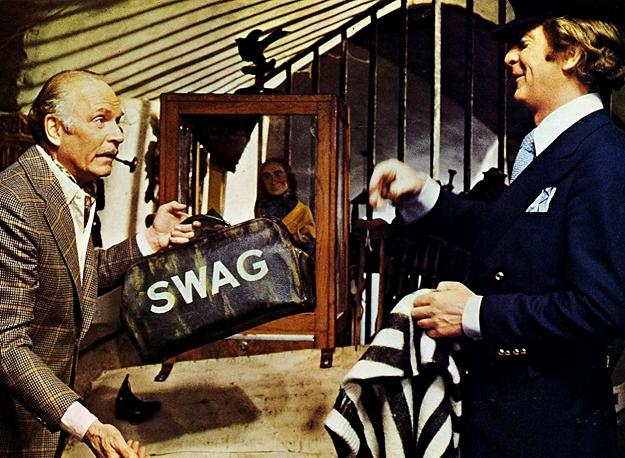
Mike and Larry: Milo (Michael Caine) and Andrew (Laurence Olivier) in 'Sleuth'.

Is there a thin line between farce and reality? Can a game be going too far? When you are locked in a Game of Death (hope you still have life to finish this article), will you be like King Charles the First, keeping your dignity as you mount the step to the scaffold? When is the moment when performance ends and reality starts? The most thrilling encounter is likely the moment when two individuals lock in a battle neither can easily turn away from, and this is the theme of the film I talk about this time – ‘Sleuth’ (1972) !!

‘Sleuth’ was the last film directed by the American director Joseph L. Mankiewicz, who was the director for classic Hollywood films like ‘All About Eve’, ‘Barefoot Contessa’, and ‘Cleopatra’. The film was based on Anthony Shaffer’s play, which won a Tony award; and starred two legendary British actors – Lord Laurence Olivier and Sir Michael Caine. If there is something ‘Sleuth’ could be proud of, it would be that the film made ‘The Godfather’ (by Francis Ford Coppola) have a run for the money. Both films competed for the Oscars in a number of the common categories 1972, though eventually Marlon Brando won the Best Actor for The Godfather, and Bob Fosse defeated both Mankiewicz and Coppola in the Director category. Ironically, Lord Olivier has been offered the chance to star as the Godfather because Brando finally took the place.

My personal feeling about ‘Sleuth’ is that it is a curious blend of a comedy (albeit a very black one) and thriller. The dialogues throughout the film are tongue-in-cheek, or facetious (as Inspector Doppler would have put it), yet at the same time, the heavily dialogue-driven film was also very tense, and surprises and table-turning moments could just appear at any time. The cinematic version of Sleuth was quite alienating for most viewers – which I believe was deliberate by the director – because the dialogues just went on and on like a non-stop motor, and though they were beautifully written and full of witticism, it could be quite harsh for the audience. The presence of the complicated sets and the various mechanical dolls, accompanied by the eerie sound, also generated an unsettling atmosphere for the audience. It is a very rare instance I can find a film both comedic and thrilling at the same time. Indeed, a similar aspect between ‘Sleuth’ and ‘The Godfather’ was that both films relied on very strong performance and a dialogue-driven screenplay to make the films work, and at the same time these considerations did not undermine the visual and technical aspects of the films.

A comment regarding spoilers. From now on the article will be loaded with spoilers, and it is important for ‘Sleuth’ because there are a few important twists in the story. It will be great if you can experience it first hand – though the story itself is not that of a secret if you look at the internet. Also, it is an extremely dialogue-driven film, and it is so intense in terms of dialogue that some viewers may be alienated by it. Yet, the dialogue is an important aspect of the film, and probably the film’s strength because they are so witty, dynamic and facetious. Sleuth is a film that rewards repeated viewing, as when you watch this great film again, you will be able to appreciate the cleverness of the plot and also the brilliant dialogues from Mankiewicz and Shaffer.

Sleuth is special because the film only has two characters – the other names on the cast are fake and are used to mislead the audience. The two characters interact for almost 140 minutes predominantly inside a house, and the claustrophobic and suspenseful atmosphere of their games generate a sort of unsettling and thrilling impression for the audience. The absolutely brilliant performance from Lord Laurence Olivier and Sir Michael Caine was one of a kind and that represented one of the most spectacular encounters between two legendary actors.

The story concerned Andrew Wyke (Olivier), a rich mystery novel writer; and his love rival, Milo Tindle (Caine), a hairdresser who had a salon. Andrew was aware of the fact that Milo was dating his wife, Marguerite, and after sending her and the servant out for a holiday, Andrew invited Milo to his manor to settle things out. Andrew seemed to offer a friendly hand to Milo, and suggested that Milo should commit a fake burglary, to steal Andrew’s jewelry and valuables from the safe in the house, so that Milo could have the money to support his life with Marguerite, and Andrew could claim the insurance and settle himself with his mistress, a girl called Tea. Milo agreed to the plan. After the burglary, Andrew exposed his true face – it was a trap for Milo. Andrew pulled a revolver and explained to Milo that he wanted and humiliate and kill him because he was pissed off with Milo stealing his wife. Milo begged for mercy, yet Andrew pulled the trigger anyway – and apparently killed Milo. Of course, that is only a trick. Andrew used blanks, so he did not really kill him. His intention was only to humiliate Milo and made him embarrassed.

In the next evening, things started to go wrong. A policeman known as ‘Inspector Doppler’ visited Andrew and stated that the police suspected that Andrew was responsible for the disappearance of Milo and his alleged murder. Andrew desperately explained to the Inspector his charade, and maintained that Milo did not die and has been sent away safely. Yet, Inspector Doppler found out more and more evidence around the manor, pointing to the conclusion that Andrew has killed Milo. At the point Doppler was going to arrest the helpless Andrew, a twist appeared! Inspector Doppler revealed himself to be no one other than Milo himself (so the films only consisted of 2 characters), and all those evidences were planted by him. While Andrew acknowledged Milo’s wit, Milo were not finished with it yet. He wanted to play with Andrew a game he coined a ‘real murder’. Milo told Andrew that he has killed Tea, and he has placed evidences around Andrew’s manor so that the police would likely confirm Andrew as the suspect. When Andrew has confirmed that Tea was indeed murdered through the phone, he was forced to play the game by solving Milo’s riddles. After Andrew has disposed of all the evidence, Milo exposed the twist – everything was fake and Tea was still alive, the game was a plan by Milo and Tea, who wanted to come back at Andrew’s meanness. Milo said he has got even with Andrew and planned to leave the manor.

Andrew, however, would not let this go. He loaded his revolver his real bullets, and said he wanted to kill Milo this time for real. Milo warned Andrew that he did anticipate such a possibility and so has already called the police. Thinking that Milo was lying, Andrew killed Milo with the revolver. Then, the sirens of the police cars could be heard outside the manor, as Milo did indeed call the police. As the helpless Andrew waited for his own destruction, the dying Milo told him, ‘Andrew – be sure to tell them – it’s all a bloody game.’  

Joseph L. Mankiewicz, a key filmmaker from the golden age of Hollywood, has devised a very unique style to his cinema. First, his films were often described as ‘theatrical’ – some French critics termed them as ‘théatre du filmé’. In a Mankiewicz film, it was often noted for the spectacular performance from the key actors. In ‘Sleuth’, this was particularly evident because the 2 lead actors were using a mannerist style of acting, and their actions and dialogues reflected the social status and personalities they had.

Mankiewicz was known as a director of the interior. His films were predominantly taking place in interior space, such as a house, a room, or a private space, rather than out in the open, like the Film Noir or Western popular at his times. With a gift for screenwriting and direction, Mankiewicz often provided atmospheric and dramatic narratives in these limited spaces, and his interior mise-en-scene often reflected the mental landscape and interior life of his characters. In Sleuth, the fact that the 2 characters were matching wits inside the house generated a claustrophobic feel for audience alike. The maze-like manor also signified the unpredictable and deceptive attitude by both characters,  and the preponderance of all sort of mechanical dolls not only generated a paranoid and uncanny atmosphere, it also emphasized the playfulness and artifice of the whole situation.

On the other hand, Mankiewicz was often seen as a woman’s director, as his films were mostly about a female protagonist or concentrated on a female character. While ‘Sleuth’ was special because it was concerned with two male characters, the motives behind their every action were about a woman they both wanted to get to themselves.

It is worth noting that while Mankiewicz’s ‘Sleuth’ is ‘theatrical’, he has also employed very cinematic means to achieve a dramatic effect on the screen. In the film, he has employed very stunning long takes and tracking shots to let the audience convey the space of Andrew’s manor. This is a significant point because, for such a dialogue-driven film, you can literally deliver it out without any form of set design – which is an approach in some styles of theater (e.g. Theater of the Absurd) – and the non-visual dialogue itself will be able to attract a sustained attention from the audience. Mankiewicz has placed emphasis on mise-en-scene in his many films. In his version of Sleuth, Mankiewicz has placed emphasis on a complicated set, and in no way this set would lead to a comfortable and homey impression for the audience. It seemed more like a decaying maze, and the movement and gestures of the two characters became as critical and tight of a chess move. Their movements around the house reflected the continuing and ever shifting power struggle between the two sides, and whatever room they entered, the topic of their conversations would address to the nature of that interior space – private talk in bedroom, bargaining in the game room, charade in the attic. The alienating set and movement reflected the unknowable motives behind the two characters, and how the table could be turned at any instance in this game of death. In terms of cinematography, Mankiewicz shot everything by an old-school approach, using deep focus for most of the scenes, playing out sharply the tug-of-war for control between the 2 characters.

The French philosopher Gilles Deleuze, through his studies of cinematic signs, have designated Mankiewicz’s films as an example of the time image (recollection image), and called Mankiewicz the ‘greatest flashback auteur’. The use of flashback or recollection sequences can be considered important for his films, because they often made sense of the motivations of why the characters in question made a certain decision that would lead to consequences of all kinds. While in Sleuth there were no genuine flashback sequences, there were substantial amount of the narrative where the characters were engaging memories or some form of recollections (though the latter ones could be fabrications, as in Andrew’s case when he faced ‘Inspector Doppler’). I feel that a tragic aspect of Andrew’s situation was that he could not move on from his past, for which at a time he was the winner of his game, and he became over nostalgic on that, and treasuring only the good old days. He could not come to terms that his younger rival, Milo, was more intelligent, charismatic and resourceful than he was, and Andrew could only rely on his outdated racial stereotyping and prejudice to make himself feel a bit better. Andrew wanted desperately to win in this game - yet Milo was too much of a formidable opponent for him.

‘Sleuth’ clearly illustrated the concept of ‘The Double’ often found in many films and literature, and this concept was also evident in the case of the story structure.  The story is deliberately separated into 2 parts, and one can easily see that the two parts follow very much the same plot – the first time Andrew outwitting Milo, the second time the other way round.  If we set our focus on Andrew’s point of view (which I guess it may be underlying motivation on Mankiewicz’s side), you can also see the whole film is the ‘Rise-and-Fall’ story of Andrew, who believed his intelligence and status deserved a triumph over his love rival. The first part is Andrew’s Rise, to his successful humiliation of Milo, and the second part is obviously his Fall, how he got doubly-outwitted and eventually was provoked to commit a true crime. As I have said before, a story with a over-formalized structure or too many coincidences will likely attract criticism, because it may be seen as a lack of creative input from the author and also a lack of spontaneity in terms of the dramatic action. Yet, the ‘double’ structure in ‘Sleuth’ served the purpose well, because it illustrated the tragic dimension of the story itself – if none of the two men were willing to stop the destructive engine of play and deception, things would repeat itself – only with a more disastrous outcome.

(1/2)

by Ed Law
9/12/2017

Film Analysis


Monday, 4 December 2017

Harakiri, Part 2


Celebrating the 55th Anniversary of Harakiri (1962)

Last time, I have started discussing Masaki Kobayashi and his masterpiece, Harakiri (Seppuku, 1962). The story of the courageous and lone samurai, Hanshiro Tsugumo, and his attempt to avenge for and regain his family’s honor by exposing the hypocrisy of the samurai clan, House of Iyi, serves as one of the most inspiring story regarding the power of individual in the history of cinema. The major themes in ‘Harakiri’ are about the individual’s place in an amoral universe; the contempt for the corruption of power and establishment; and the hope for ultimate freedom.

Kobayashi has adopted a formalized approach regarding the mise-en-scene of ‘Harakiri’. The geometric composition in many scenes stressed the power struggle and containment of individual freedom in the feudal era, and the symmetric and regimented approach to the diverse rooms (the spatial aspect) and human interactions in the House of Iyi illustrated the mechanistic and deterministic actions demanded by the philosophy of the samurai. The use of composition to provide critique on Bushido has also been employed by other directors nicely in the Samurai cinema of 1960s, such as those in Kihachi Okamoto’s anti-Samurai films. When we look at films like ‘The Sword of Doom’ and ‘Samurai Assassins’, the symmetric composition exposed the struggle of individual in the realm of feudal control, and the dehumanizing effects from a set of pre-determined and ritualistic rules.

‘Harakiri’ was also notable for the use of close up to show facial expressions. Especially in ‘Harakiri’, Kobayashi’s use of facial expression has found his true power. These close-up shots are the only time when the characters are showing their true feelings. With such a close-up, the character can no longer hide behind their masks. The humiliation and anger of Hanshiro, the disappointment of Miho, the fright of Omadaka (the swordsman), and the shame of the clan leader. At the key moments, Kobayashi did not let any of these sentiments escape the audience. After, Kobayashi is a committed humanist, and no matter how dehumanized or old-fashioned the characters have come to be, they are all humans after all, and can in no way escape the character traits so evident in humanity.

‘The suspicious mind conjures its own demons.’

The narrative of ‘Harakiri’ not only makes the story suspenseful and intense, it also serves the purpose to illustrate some of the deepest truths regarding human nature and history. 'Harakiri' has been noted for its frequent use of flashbacks, and it also had plenty of ellipsis throughout the film. The presence of ellipsis gave a ‘Rashomonic feel’ to the film, because now it was rather hard for the audience to cast an objective point of view on the whole situation. I suppose Kobayashi did this deliberately, as a satirical critique on truth and history. He seemed to be questioning the audience, who has the power for the final word about the story, and indeed history? Is that the one who has the point, or the one who has the power?

What was rather ironic was the cyclic structure of the film. That suggested even in Hanshiro's perspective, this incident was a significant one - significant that it would have cost his life, the House of Iyi wanted to see it as the most minor perturbation The cyclic s in its order, or the whole Bushido system was concerned. The structure of the story wanted to give the audience an ironic impression that as if nothing has happened at all – House of Iyi wants to undermine the significance of the Hanshiro incident because that will be a big shame.

‘Swordsmanship untested in battle is like the art of swimming mastered on land.’

The House of Iyi, for which Hanshiro was all against, was the abstraction of power and authority in the film. It represented establishment and foundation, and the bureaucratic sides. Also, it represented the 'norm' of the given era, when feudalism and Bushido was still the core values for the people. The bureaucratic aspect meant that the members of the House of Iyi had to work in a mechanistic way, and they could not show much compassion as that would be against the Bushido codes that governed them. They talked in a monotone style, they were matter of fact people, and their words were polished with 'ceremonial' wordings. Their actions were merely to guarantee that everything was working all right, without any infringements to the samurai codes. By contrast, what Hanshiro has said was originated from a genuine emotion. He was able to provide critique on the situation, and was more than willing to question the assumptions behind the House of Iyi’s actions. A stark contrast was effectively established between the two parties – the human, spontaneous Hanshiro and the unsentimental, mechanistic retainers in the House of Iyi.

The most elemental moral dilemma, in many samurai films, is the giri vs ninjo conflict. Giri (義理 ) is a value which corresponded to duty and obligation, in contrast to ninjo (人情), a value which pointed to emotion and human compassion. This contradiction was further amplified in the anti samurai films of the 1960s, which matched the anti establishment and revolutionary mindset of that time. The struggle between giri and ninjo is not something limited to samurai culture, but can find similar scenarios in almost any cultures of humanity - the dialectic between animalistic instinct and institutionalized rationality. Many of these film directors believed that the demands from giri and ninjo could often not be reconciled in many cases - meaning that there will be a cost no matter which sides you take. The mechanical rules dictated by Bushido could be dehumanizing and stifling for the personal freedom of individuals. These rules could be dehumanizing because they employ noble ‘sound bites’ which are ultimately empty statements.

‘I clung to these useless symbols’

The chilling aspect of these codes was that it could serve a synergistic relationship with the institutional control, especially one based on a hierarchical structure, such as the feudal society as illustrated in the film, and one should not be surprised that rules itself treasured utmost loyalty. What it seemed as a commitment to a set of formalized codes at the surface could just be the assertion of power by the ruling class in reality. The codes have to be complemented and made concrete by the use of symbols, such as the samurai sword or the special hair knot the samurai had. It would be ridiculous for people in the modern world to see how these material things could impact the life of the people, and how they equated these things to elemental concepts like honor. When you lose a sword that means you have lost your honor and will have to commit hara-kiri to redeem yourself - absolutely outrageous logic for nowadays. When the senior in the House of You asked Motome how he could pawn his sword to allow himself and his family to survive, because the sword symbolized the soul of the samurai, one can see how inconsiderate this senior is. Maybe he was just being mean and mocked Motome for his action, yet it could also mean the House has become so bureaucratic and dehumanized through their execution of the Bushido codes.

I have stressed repeatedly in the last article that there is nothing fundamentally wrong about the core values Bushido represented. In fact, if one is willing to commit to it, that can have an enlightening effect and make one more confident and a better person. What is essential, though, is to appreciate why these codes existed in the first place (I can see a similarity in the case of Confucian philosophy in Chinese culture) and the context where these codes may be misused and how that can lead to a lower personal freedom and dignity.  What it means to be enlightened, after all, is not just to embrace blindly a theory or postulate, but you have the ability and question or provide critique on it, to dig deeper and discover the possible limits...

‘This thing we call samurai honor is ultimately nothing but a façade.’

The most important symbolism in the film was the samurai statue, which has appeared a number of times, including the opening and closing shot for the film. The incidents that have been happened to the statue through the film, and the actions taken to restore the statue matched nicely with the cyclic nature of the story. The statue represented the history and legacy of the House of Iyi, and it embodied the rules of Bushido that governed and established the existence of the House of Iyi. That explained why before Hanshiro committed hara-kiri before he has defeated most of the retainers in the House of You, he threw off the samurai statue, as an ultimate stand off to the establishment and the values the statue represented. After Hanshiro died, the irony was that the members in the House merely cleaned up the mess and the blood stains, and erected the fallen statue again, at the same time fabricated the feel good version of the story that they were still the winner in the struggle against the lone samurai.

The gist regarding the symbol of the statue is that it is hollow. The hollowness symbolized the inherent emptiness of the Bushido rules. No matter how idealistic or enlightening the rules might afford, someone has to be committed to ‘fit in’ to give its meanings. If the powerful ones distorted the meanings of the rules to merely assert their positions, the ideas and rules itself would lose its meanings, and they become tools - blank statements that could not be enacted. The members in the House of Iyi, while being proud of their prestigious status in the samurai community, were not capable of committing to these rules. Because they could not come to terms that there was a ‘fallen’ samurai, who they thought was of a lower status than them, could defeat the retainers in the House and was also nobler as a human being than themselves. The members in the House could only restore their confidence and honor by covering up the whole incident, and distorting what really has happened in that fateful day. They were so desperate to assert their prestige through deception to the later generations, because they were so ashamed of the awful truth that has occurred to them.

‘What befalls others today, may be your own fate tomorrow.’

The emptiness of the samurai statue also reflected the ephemeral existence of the House of Iyi, and it was atmospheric to the presence of some unexplained smoke at the scene of the statue. It was evident that the House of Iyi did not exist due to a moral or universal reason, but it only prospered in the circumstantial way, when the given era endorsed the Bushido culture. It was ironic to hear at the end of the film that when the senior attempted to distort history in the book for the House, he stated that he believed the House of Iyi would continue to exist for the many years to come. Of course, the reality is the other way around – the samurai clans were abolished by the end of the 19th century, when a modernized Japan was born.  The ‘success story’ of the House of Iyi was a circumstantial and superficial one, and it could not inspire any later generations in a positive way. Only an individual with genuine honor has the ability to do so.

‘The greatest delicacies taste of nothing when one dines alone.’


After all, what does honor truly mean? First, it is not merely a barrage of blank statements. If one believes that by adopting to a set of empty rules without questioning their meanings, these individual are robots, not honorable persons. You have to commit and take action to be honorable. No matter how good you can recite out every rules you can remember, it will not work if you are not committed to these rules. The most challenging aspect, though, is to maintain a sense of individualism, even when the others fail to deliver or does not have the courage to do so. Some viewers may see Hanshiro’s action as foolish, because no matter what he did, he would not be able to abolish the samurai era and change his world. If he did not raise voices about the situation, he could still have other ways to survive. After all, Hanshiro was one of the only characters in the film who was willing to commit to what he has said – when he said he would commit hara-kiri, he really did it, rather than like the 2 other samurais in the House of Iyi, who ran away and hide after they have lost the duels to Hanshiro. The suicide decision was Hanshiro’s individual choice, no matter you agreed to that or not, it was still respectable. The reason why Hanshiro was a noble individual, even if his House has fallen long ago and he became a ronin, was because he was willing to stand up to the unfairness and problems the Bushido culture has led to, and has the courage to deconstruct the gaps in the logic behind Bushido. He refused to be dehumanized by the social / cultural machine and asserted his individualism in a world when loyalty and a fake sense of ‘community’ and ‘group work’ was stressed. I see Hanshiro as a heroic and honorable figure because he addressed the saying of ‘dying on our feet rather than living on our knees’. The very fact that Hanshiro stood firm to his beliefs at all costs was what made him such a memorable character, and ‘Harakiri’ (1962) a modern classic in Asian cinema.

-End-

(2/2)

by Ed Law
4/12/2017

Film Analysis


Sunday, 26 November 2017

法國新浪潮攝影展 (Photo de Cinéma)


我今天去了百老匯電影中心看一個關於法國新浪潮的展覽 。照片雖然是珍貴的歷史印記, 不過展覽規模就真是比較小! 不過, 在電影中心下層有幾間值得看看的店舖, 包括Kubrick書店和餐廳, 喜歡看文史哲書籍的朋友都應該會感興趣 我之前只去過電影中心一次-是在多年前看閃靈的重映!


by Ed Law
26/11/2017

Film Analysis


Sunday, 19 November 2017

儀式


最近, 香港重映了日本導演大島渚的作品儀式’ (1971)。此片是大島對自己的世代作最深的批判的作品, 電影風格十分像小林正樹的切腹和寇比力克的亂世兒女’(Barry Lyndon), 可見英雄所見略同! 電影借主角憶述其家族在三十多年間舉行的幾個儀式, 揭露人性背後的腐朽, 印證金玉其外,敗絮其中的殘酷現實, 和年輕世代對於改變現狀的無力感。像亂世兒女一樣, 大島在儀式中採用了極強的形式主義, 和強調對稱性構圖, 是以表現制度和儀式的機械性和死板, 以及它們對人們自由和創見的束縛。


大島渚在電影中探索的問題是: 為何我們的世界需要儀式的存在? 是促進文明理性, 見證人們是萬物之靈? 是為了飲水思源, 以維繫優良的傳統? 還是如凡夫俗子所道 – ‘一年點都要坐低食餐飯啦!’?  大島認為, 儀式並非如擁有權勢者所給予的所謂理由 人們創造儀式這種工具, 是要用來掩飾他們無法理順的情形和難題, 那當然包括了人性中與生俱來的黑暗面。尤其對於有權有勢之人, 當他們沒法合理化自己掌握的權力時, 為了鞏固自己所得的甜頭, 就必須創立一大堆的規條, 以及儀式化他們掌握的人與物。 當權者會拋出一大堆濫情的口號, 甚至會斷章取義, 去邊緣化那些對他們有所質疑的人。沒有了儀式, 便會出現很多不穩定的因素, 對他們的權力引發動盪。 當權者需要有既定的劇本, 才能演活他們的那場大龍鳳!


在片中的大家族, 已經到達風燭殘年的境地。 長老為了鞏固自己僅有的權力和虛名, 才會堅持那些古舊的儀式繼續存在。儀式看似莊重, 但其實只是為了掩飾家族成員背後的心理陰暗: 表面看似重視格律, 內裏卻是滿腹的淫亂; 對外看似宣揚我哋仲未死得’, 內心卻飽受死亡毁滅的煎熬。 執行了儀式, 就好像做咗啲嘢’, 登時自我感覺良好 (在網絡年代又可在 Facebook呃吓like) 。這個論點, 切腹亂世兒女背後的意義確實是異曲同工的。


沒有新娘的婚禮

片中最為著名的一幕, 就是主角進行婚禮時, 其祖父為了顧全家族的面子, 縱使新娘不在, 竟然堅持婚禮儀式繼續進行, 使得可憐的主角得到一個没有新娘的婚禮。 為了挽回家族那苟延殘存的虛榮, 大家對主角的內心感受也是不屑一顧。 這一幕就像大島前作絞死刑的最後一幕, 出現了一個沒有死囚的絞刑架一樣。 大島除了受到戲劇大師Brecht影響外, 亦往往會用荒謬主義風格去表述故事, 諷刺人類行為的無理。當觀眾體會到制度背後的問題時, 亦不禁會發出一陣冷笑, 詰問: ‘咁都得?!’ 長老偏執地堅持儀式繼續機械地進行下去, 倒讓新娘的親戚廣傳他那既迂腐又鎖國的宣言: ‘我們的新娘沒有受到外來文化的荼毒, 那就是最純正最好的!’ 或許, 他們就是差了做亢奮的跳高三次那一個動作!


犬儒的聽風者

儀式, 大島賦予他的主角發聲的權力, 讓主角這位年輕一輩的代言人憶述家族諸多儀式對他一生的影響。他發現了自己那所謂的名門望族的陰暗一面, 以及這些事對他的負面影響。 觀眾應該會感受到主角的世代對改變現狀的無力感。事實上, 主角一生中不少的經歷, 是因為家族為了捍衛其守舊的傳統而間接造成的。 縱然有人有膽量在絕境叱喝, 亦會為安於現狀的力量所淹沒。 尼采早就預視到, 即使真正的強者出現, 也會為大量抱有犬儒心態的弱者所擊敗。 因為如果人不肯作出根本的改變, 而甘於受控的話, 任何曙光亦會為之幻滅。當人們無力或者無膽量去求變, 為了在既有的制度下尋到一線存活的縫隙, 就會變得犬儒, 變成自身時代的玩偶。

  
, 又有膽量去構想在儀式框架外的天空嗎?       

by Ed Law
19/11/2017

以戲服人 Film Analysis


Monday, 6 November 2017

Harakiri, Part 1

It is easy to boast what you believe in, yet at what cost are you willing to commit to that? If the consequence of doing this will lead to your own destruction, will you still stick to any of these beliefs? With a solitary existence, do you have the courage to stand up to the waves of corruption, and the army of hypocrisy that are so inherent in the world you exist in? These are the questions that are addressed in ‘Seppuku’ (also known as ‘Harakiri’, 1962), the absolutely wonderful film by the Japanese director Masaki Kobayashi!

‘Harakiri’ is a timeless classic, and I can say its power can be considered on equal terms with any of the greatest Kurosawa classics. The film won the Special Jury Prize in the Cannes festival, and it has inspired a number of subsequent directors. Famed for its extreme dramatic intensity, ‘Harakiri’ concerns the final day of the elder ronin Hanshiro Tsugumo’s life, and his attempt to regain the honor of his family at a corrupt clan known as the House of Iyi. The melancholy in the story is almost comparable to any Shakespearean or Greek tragedies, and its universal relevance to our existence makes it one of the most wonderful human dramas in world cinema. Through a memorable performance by the smashing actor Tatsuya Nakadai as Hanshiro, the film has inspired us to have the courage to fight against injustice and to stand firm on what we believe in, no matter what the cost may be, or how insignificant the power of a individual is. Since I first watched ‘Harakiri’ in my teenage years, it has always been a moving film to me, and it has the honor to be my favourite non-Kurosawa (!!) Asian film of all time. I have always reminded myself that, if I will be writing about cinema one day, I will definitely write about ‘Harakiri’. I suppose this is a ‘matter of honor’ issue here!
Before we look into the film, I suppose I need to say a few words about the 2 traditional concepts – ‘Bushido’ and ‘Seppuku / Harakiri’. While many of the films in the 1960s tend to be critical about the traditional Bushido code (‘The Way of the Warrior’), I personally do not find to be harsh towards Bushido. Indeed, I feel that many of the codes in Bushido are still highly applicable ( I have often wondered if a bushido for writing is possible?!), and they can really help us to improve ourselves, and become a greater guy. Yet, just like any rules, we have to understand the context these codes are based on, and the reason why these codes exist in first place. I suppose Kobayashi-san’s intention in ‘Harakiri’ is to show the dark side of bushido, the other side of the story. Even if you find yourselves more inclined to this revisionist stance, it does not mean that one has to discredit, for example, Kurosawa’s ‘Seven Samurai’. Only by understanding both the good and the bad sides of the code, one will really be able to have a holistic view of the whole issue.

Seppuku (or Harakiri), on the other hand, is something more hard to appreciate. Harakiri literally means stomach disembowelment, and this practice is seen as a honorable suicide by the samurai class, a way to redeem one’s honor. The act is often done in a ceremonial manner, and it starts by the samurai doing the hara-kiri, and then it is followed by the decapitation administered by a second member, which is known as . This is done as to give the a quick kill. Now, viewing it from a modern perspective, this act seems a bit unthinkable (or even silly). As a fan of B-movies, I can quote a few examples that can put things into context. Take Rocky III – if Mr. T has defeated Rocky at the first match, does that mean Rocky has to stroll back to little Italy and kill himself? No, as David Sloane from Kickboxer 4 told his nasty nemesis Tong Po, ‘you just have to beat me in a match and regain your honor’, to avoid further shame. It is the ‘I’ll be back’ logic that governs all these macho b-s, or sugar-coated in a way, the ‘matter of honor’ thing. To regain honor, you need to do is to defeat your opponent in a rematch, as simple as that. Why would the samurai prefer death rather than dishonor? I feel it is rather tough to access to this ancient mind-set, though we can have some insights when we try to link up all these ideas in the next article. Anyway, the easy way out is to appreciate that, in Kobayashi’s film, the very act of Harakiri is an acid test to see one is honorable or not.  Through their differing attitudes towards the act of Harakiri, we can easily see the ones who can truly commit to their own beliefs, in a situation where almost everyone apparently states that these codes and beliefs are ‘important’ to their own samurai existences.

Hanshiro Tsugumo (Tatsuya Nakadai), an elder ronin, arrived at the House of Iyi, a samurai clan, in a particular afternoon in 1630. There, he requested for a place to commit a honorable suicide. The elder clansman, Saito, invited him for a brief chat. Saito asked whether Hanshiro knew a younger ronin, known as Motome Chijiwa, as they both seemed to serve at the same clan years ago. Hanshiro seemed to have no idea who this Chijiwa was. Saito, stating this was of minor importance, continued with a story about this young ronin.

Chijiwa, like Hanshiro, actually came to Iyi some time ago, and also begged fior a place to commit hara-kiri. The clansmen in Iyi discussed the issue, and some of them believed that Chijiwa’s true intention was to bluff them, and asked for money in return, or even a position in the samurai clan. Hikokuro Omodaka (Tetsuro Tamba), a senior retainer, suggested that they should force Chijiwa to commit Harakiri, so as to serve as an example to those who might have these intentions in the future. Chijiwa, with no clear idea what his action might lead himself to, was absolutely surprised when they allowed and insisted him to commit hara-kiri on spot, and it was all too late for him to step off. Before the hara-kiri ceremony, the clansmen in Iyi were thrilled to discover Chijiwa did not even have a real samurai sword – all he had was a sword made from bamboo. The members of Iyi asked Chijiwa to commit hara-kiri anyway, by using his bamboo sword. Since the bamboo sword was pretty blunt, it made the whole experience far more slow and painful, and Chijiwa died with ultimate dis-honor.

After telling the story, Saito asked Hanshiro if he had any second thoughts. Hanshiro insisted he would do it, and urged the members in the house to prepare for the ceremony. He even stated that he would not change into the light-colored hara-kiri clothing, stating that his dark attire suited the situation appropriately. Before the ceremony started, Hanshiro had to nominate for a second who would do the for him. Hanshiro suggested 3 names, yet interestingly, they were all absent. Hanshiro insisted he would like to have either one of these members to do , so men were asked to fetch them. In order to pass time, Hanshiro decided to tell the House of Iyi his life story, because, ‘What befalls others today, may be your own fate tomorrow.’.
To everyone’s surprise, Hanshiro did have slight acquirancce with Motome Chijiwa. Motome was actually Hanshiro’s son in law, and he was the son of Hanshiro’s close friend. Motome married Hanshiro’s daughter, Miho, and they had a child together. However, after the dissolution of their clan, Hanshiro and Motome could not find any jobs in the harsh world. It was a time of peace, and many samurai clans were abolished and the samurais could not find many opportunities. Hanshiro and Motome could earn for a meager living, yet when Miho and the child were sick, things went like a downward spiral. With no money to buy medicine, Motome had to go as far to pawn his real samurai sword in exchange for money. It was then he went to the House of Iyi to look for opportunities, but this sowed the seeds for his demise. When the corpse of Motome was delivered back to Hanshiro and Miho, he was more than horrified to see the bamboo sword, and felt truly dis-honored by such an act. Soon after, Miho and succumbed to their illness and passed away. How, Hanshiro was alone, and he realized the Bushido code would never be able to provide any justice to the vulnerable one...

Hanshiro blamed Saito and the clansmen for the decision to kill Motome in such a manner, yet Saito insisted that they have done nothing wrong and denied any responsibilities. Knowing that he would not be able to change their opinions, Hanshiro announced that he was ready to join his family in another world. Before that, he decided to show them ‘one last thing’. They were the headknots of the 3 absent samurais!
Now, Hanshiro told the clansmen that, he has already taken action. He stalked down the first two samurais and challenged them to duel. Of course, Hanshiro defeated both of them easily.

Hikokuro, knowing about Hanshiro’s ordeal, came to his house and challenged him to a duel. Though Hikokuro was a skillful swordmen, he had no real war experience like Hanshiro. As Hanshiro commented, ‘Swordsmanship untested in battle is like the art of swimming mastered on land.’ Eventually, Hanshiro defeated Hikokuro.

Hanshiro insinuated that, while the House of Iyi claimed that they followed Bushido, their 3 skillful retainers were so coward to even come back when they have lost the duel. Consumed with shame, Saito could only wipe out Hanshiro for good. He ordered the clansmen to kill Hanshiro, and a wonderful showdown started, which could only been described in images.

After turning Iyi upside down, Hanshiro committed an anti-establishment act (that’s movie in the 60s) – he threw the samurai statue on the floor. And, as he has promised, Hanshiro committed hara-kiri. However, to avoid further shame, gunmen were sent in and Hanshiro was gunned down as a result. After a messy afternoon, the House of Iyi has taken action to set things right. They ordered the 3 clansmen to commit hara-kiri, and then they cleaned up the house, and re-erected the samurai statue. For the record, they fabricated the whole story as an honorable suicide, and of course skipped out the shameful part. After that, it seemed nothing has happened at all, and the House of Iyi was still standing. The clansmen might try hard to forget Hanshiro, yet, for the audience, we will always remember how a courageous and wonderful man he was.

(1/2)

by Ed Law
6/11/2017

Film Analysis