Friday, 29 July 2016

Béla Tarr

Béla Tarr is a world-renowned filmmaker from Hungary.  While Tarr has been influenced by Miklós Jancsó in terms of cinematic style, Jancsó's films were more human-centered than Tarr's. In fact, many of Tarr's films can serve as examples in the field of 'Transcendental Cinema', and he has also been a key director in the area of 'Slow Cinema', where cinematic time has become a character in the de-dramatized narratives for these films.


Tarr started his filmmaking career with a strong commitment to realism. In order to achieve this, he favored the use of the non-professional actors (much like Italian Neo-realism and the French New Wave), long takes and the use of cinéma vérité techniques. The Outsider (1981), one of his earlier works, in here Tarr has expressed an ‘anti-cinematic’ approach, as he felt the mainstream cinema was telling the truth in terms of the portrayal of characters. In the film, the protagonist, who composed music and yet was anti-social, felt like a very realistic character.


Since the mid-1980s, Tarr’s style has not only become more stylized, and far more philosophical. In terms of techniques, his long takes become far more elaborated and lengthy, and mobile camera movement became a motif in many of his later films. Certain motifs became components of his signature style: from the frequent images of bodies obstructing the view, to the prevalence of walking scenes, which were similar to Tarkovsky's films, the personal cinema of Bela Tarr emerged.


Tarr’s later films touched a lot on the topic of existentialism. He is like a cinematic Schopenhauer – focusing a bleak depiction of reality, and engaging the cinephiles to the pessimistic side of human existence and to contemplate on topics such as nihilism, alienation, indifference, facticity and social order.  Tarr’s crowning achievement was likely to be ‘Sátántangó’ (1994), translated as ‘Satan’s Tango’. The film consisted of an unconventional structure, broken in 12 parts, and not necessarily chronologically arranged. What was more wonderful was the film run well over 7 hours, with only about 150 shots, meaning that each shot was about 10 minutes, before a cut took place. While Sátántangó had many occasions for the viewers to contemplate on existential issues, one particular interesting theme was the question of deity by Tarr. One of the key characters have a god-like presence to the other characters in the story, which, at the story unfolded, he was more of a swindler than some sort of visionary. The False Prophet theme seemed to appear a lot in films, that reminded me of Paul Thomas Anderson’s ‘There Will Be Blood’, and some of Luis Bunuel’s films, too. Often, this reflected the atheistic views by the filmmaker or the challenges to organized religion or even authority, in which these Nietzschean themes seemed to fit nicely to a film about existentialism. Nietzschean ideas are also featured in another of his film, ‘The Turin Horse’ (2011).


Another Tarr film worth pursuing is ‘Werckmeister Harmonies’ (2000). It is a film of desolation, brutality and the unethical actions made possible by humanity. Shot in 39 long takes, and presented in an episodic and poetic structure, the story of a composer and the other hopeless residents in a town in the post-WWII era was intertwined with the arrival of a circus and a decaying circus whale. The political stalemate was complemented with the darker territories of the human psyche, and only the innocent ones, including the poor old whale, suffered as a result. Tarr seemed to be posing the question – even if a newer system appeared to save the day, will it change if the nature of humanity has not?


At 2011, after finishing ‘The Turin Horse’, Tarr announced that he would not make any more films, and concentrated on film education to the young ones. Though it is a shame that we will not have any more films from such an original master of modern art cinema, it is nice to see that he is still contributing to film art. All these films are art house films, yet they are worth it if you have the patience to appreciate and contemplate them.


by Ed Law
Film Analysis


Saturday, 23 July 2016

Miklós Jancsó

Miklós Jancsó was one of the most famous and acclaimed filmmaker in the cinema of Hungary, and his films have been recognized by many film festival in Europe. Films like 'The Round Up' and 'Red Psalm' are great arthouse films and they are noted for a balance in both technical and
thematic aspects.

For Jancsó, a major theme of his work is power – especially that of political power – and its potential abuse at the cost of the others. Before the end of the 1960s, his work was more committed to a social realism, and the topics in his work, which was often based on historical events, contained many political allegories and provided critique on political issues. His work has often been the favorite contenders at the Cannes Film Festival, where he was nominated for the Best Director award for a number of occasions.

At the start of 1970s, Jancsó’s films became more stylized. He used more abstractions and symbolism (such as the circular shape), and carefully choreographed the elaborate scenes, and employed far more long takes. Especially worth mentioning is ‘Red Psalm’ (1972), often cited Jancsó’s masterpiece. The film, which was about a small peasants’ revolt at the late 19th century, consisted of numerous long takes (ASL ca. 3 minutes), and each lengthy shot was accompanied by music often performed by the characters, rendering the film a fluid and musical feel. His later films, while varying in themes and focus, were more or less adopting a similar style.


by Ed Law
Film Analysis


Saturday, 9 July 2016

Dr. Strangelove, Part 2


If there is one element that has made ‘Dr. Strangelove’ so memorable, that’s it – character. The real fun behind ‘Dr. Strangelove’ was the repertoire of memorable characters, the funny way they behaved, and the tongue-in-cheek quotes they have delivered. It was all these funny antics that have led to a lasting impression on the audience. Of course, this also serves as a testament to Kubrick’s dark sense of humor, and the wonderful performance from the cast.

What is in a name?

Well, a lot, especially when you want to be funny about that. All the characters in the film not only has got funny names, these names indeed reflect very much what sort of personalities these people are. To start with, the stunning Peter Sellers have starred in 3 roles in the film, all with very different personalities, thus testifying his ability to portray diverse characters. The fact that he has improvised most of his quotes only added on to his brilliant performance.

Sellers’ 3 roles are Mandrake, General Jack Ripper’s executive officer; US President Muffley; and Dr. Strangelove, a German scientific consultant to the Pentagon. To me, ‘Mandrake’ suggests a matter-of-fact sort of person; Muffley suggests muffling speeches, and Strangelove is likely a surname modified from a very non-English one. What do these names suggest to you?

Sterling Hayden, who has already appeared in ‘The Killing’, is General Jack D. Ripper. It obviously suggests the serial killer ‘Jack the Ripper’, and indeed General Ripper was just as maniacal and mentally disturbed as the serial killer. A nice ‘Kubrickian’ shot of General Ripper was the low angle shot, when he was philosophizing the potential conspiracy of water poisoning from the Russians. This low-angle motif would appear again in many of  Kubrick’s later maniac characters, from Alex De Large in ‘A Clockwork Orange’ to Jack Torrance in ‘The Shining’.

George C. Scott starred as General Buck Turgidson, a general more serious on love affairs than the military ones. Certainly, the word ‘turgid’ does not require further explanations, right?

Slim Pickens played the role of Major T. J. King Kong. If you know his ultimate demise, you can’t stop feeling sorry about this cowboy-type character – he was just as tragic as the giant ape, in some way.

These were all tongue-in-cheek names, and Kubrick did not stop here. What he has done was to instill very funny aspects to all these characters, and when we laugh at what these characters have done, we cannot stop feeling disturbed by the fact that Kubrick’s film is satirizing the real world. 


Pokerface or Joker-face?

Kubrick, like many of the wise men throughout the centuries, was deeply skeptical of all political activities. In ‘Dr. Strangelove’, he has shown us the true faces of all these big brasses who are supposed, at least in their wording, to serve us; yet in the real sense, to rule us. Kubrick has shown us that, even for these powerful men who are supposed to embrace big ideas and lead the world to a better end, their behaviors are just as childish and farcical as some unruly blokes on the street. These characters seem to be more concerned with their power, and, in the case of Turgidson, his women, than anything else. Thus, the audience should be highly skeptical whether these men can contribute in some way to end the disaster and lead the world to a brighter future. And, should it be surprising that the big brasses being portrayed in ‘Dr. Strangelove’ have bore rather uncanny resemblances to the top political figures in the real world? It should not be too surprising because this is the ingenuity of Kubrick, after all.

Dr. Strangelove, most evidently, is about the Cold War paranoia. This is best illustrated by Jack D. Ripper, who has developed an unjustified paranoid delusion about the conspiracy theory of water poisoning from USSR. Standing from a distant era, if you want to have a taste about the Cold War paranoia, an easily accessible pick will be Steven Spielberg’s ‘Bridges of Spies’. The underlying reason why such a paranoia would become commonplace is due to (in some way, a deliberate) lack of communication around the world. The communication motif is also a Kubrickian motif, when I will elaborate more in later passages. Yet, another contributing factor to the towering paranoia is that of propaganda. It was well-established, and indeed critiqued in many 1950s films, that the 1950s / early 1960s was an age of conformity. The common people were encouraged not to ask or challenge too much about policies, and to conform to what they have received from the government. In a sense, the government ‘painted’ the impression of what they wanted to show to the common people about the ‘Red’, and with the combined action of the witch hunt-like accusations from various self-proclaimed patriotic sectors, the paranoia about the Red, and worse still, about each other grew throughout the decade.

Another paranoia, for which Kubrick has nicely illustrated in a darkly comedic way, is the possibility of an all-out nuclear war.  A theory related to this issue is known as the ‘mutual assured destruction’ (MAD). I am not a military expert or a game theorist, therefore I feel that I am not in the position to analyze this theory in detail. Yet, I can provide some observations.

The idea of MAD is that when 2 opposing sides are having a stand-off, both sides are deterred from the nuclear war because no matter who will win out at the end of the day, the nuclear disaster that results will kill off both side. However, if one side has already drawn the first blood, the other side can retaliate – and that will lead to the even more disturbing situation of the ‘Doomsday Machine’. The activation of the Doomsday Machine is equated with the end of world, which will surely wipe out all lives on Earth.


What has disturbed Kubrick even more was how the powerful politicians were going to approach these military strategies. First, there is the case of pressing the wrong button at the wrong time, as the situation of Jack D. Ripper has already shown. Furthermore, it is the often cold and rationalistic views of the politicians that make them unsettling. In ‘Dr. Strangelove’, the various characters in the War Room have accepted the fact of MAD and Doomsday activation, and they seemed to be more than willing to sacrifice a number – talking about millions – of people to rebuild the common people’s life in the mineshaft. Rather than minimizing the destruction and casualties which were caused by their sloppy attitudes, they have decided to accept that there would be body counts and instead shifted their focuses to the underground reconstructions that they felt were ‘constructive’. Certainly, these political figures were more concerned with how they would be portrayed in future history books, as ‘patriotic hero’ and ‘Nuclear machismo’ rather than ‘pacifying coward’. This issue has also been addressed in a previous Kubrick film, ‘Paths of Glory’, and to a lesser extent, in Kubrick’s ‘Barry Lyndon’ and ‘Full Metal Jacket’.


A sense of fatalism is also apparent in ‘Dr. Strangelove’. Though all the men in the film were trying hard to set things right – or at least pretending to, as in the case of Turgidson – most things were beyond their control. President Muffley, for example, was an underdog who did not have enough charisma to lead his men to solve the problem. Major Kong, who has tried really hard to complete the mission, accidently fell off with the missile and led to the activation of the Doomsday Machine.

Speaking of the most Kubrickian character, it must the title character Dr. Strangelove. What is more ironic is that this peculiar character is not even in the novel the film is based on. Dr. Strangelove certainly could not control himself – because in medical terms – he was likely to be suffering from agonistic apraxia, and he could not co-ordinate the two hemispheres of his brains. As a result, he could not control his limbs properly and has to be retired to a wheelchair. However, he was seen as a cold and calculating scientist, and he proposed, in an unsentimental way, the plans to rebuild humanity from a nuclear holocaust. To me, his uncontrollable behaviors represent a conflict in ideology. He was literally torn apart by the various contradicting political forces he was involved in. Though he was working in USA, there was still a bit of Nazism in his psyche. Should that be surprising to us? There are often contradictory characteristics in our minds, and too often we simply cannot reconcile it. It depends really on which layer of our characters we want to show, after all...

One further motif in the film is the lack, or failure, of communication. In the film, the messages could not be passed effectively, or at the appropriate time. Some people, like Ripper, deliberately shut out the dialogues to prevent others from interfering. President Muffley, while on the phone with the Russian prime minister, did not have the gumption to pass the request out right. The Russian ambassador announced about the Doomsday Machine, and explained why he didn’t tell the US earlier - because the Russian Prime Minister loved surprises. Mandrake was on the verge of not getting the phone call to the President, and he had to break a vending machine to have coins for the payphone. Major Kong lost contact with the US government, and in a sense led to his demise and the Doomsday because of that. People failed to connect with each other, or they did not want to connect – the spirit of the Cold War – and the effects would harm just everyone. The failure of communication is also a theme prevalent in Kubrick’s late film, ‘The Shining’. After all, humanity is all about communication.


Meeting at the World's End

The ending was disturbing, yet Kubrick has been able to illustrate it in a darkly comedic way. The end of world was coming, and it was the time when the wheelchair-bound Dr. Strangelove miraculously stood up and proclaimed his respect for the Führer. With the footage of numerous nuclear bomb tests, the misanthropic images were accompanied by the light-hearted song ‘We’ll meet again’. This contrasting feel of music and image will find its presence again in films like ‘A Clockwork Orange’, ‘Barry Lyndon’ and ‘Full Metal Jacket’.

By transforming a supposedly thrilling and disturbing war film into a satirical one, Kubrick’s cautionary tale about power and excess is the one that will imprint in the audience’s mind. And of course, if the end of world is not coming soon, I am sure we’ll meet again!

(2/2)

by Ed Law
9/7/2016

Film Analysis - 67


Saturday, 2 July 2016

Dr. Strangelove, Part 1

Peter Sellers as Dr. Strangelove.

After ‘The Killing’ (1956), Stanley Kubrick went on to do a number of films, which were supported by large movie studios. While ‘Paths of Glory’, ‘Spartacus’, and ‘Lolita’ have also attracted critical appreciation throughout the years, these films represented works that Kubrick has not yet been able to exert maximum artistic control on his projects – in particular, ‘Spartacus’. It was only in 1964, when ‘Dr. Strangelove’ was released, it marked the first film with a Kubrickian style we can now easily identify. Dr. Strangelove, one of the most wonderful black comedies in the history of cinema, is the focus of this article.


‘Dr. Strangelove’ was loosely based on the novel ‘Red Alert’. Originally, Kubrick aimed to make a thriller about the paranoia of a nuclear war during the Cold War period. On further development, the tone of the script has significantly changed and the feel of the film became a satirical dark comedy. It was not bad news at all – as it is ripen for Kubrick to show us his unique brand of dark humor, which would appear again in his later work. Working with actors from his previous work, such as Peter Sellers (who started as 3 roles in the film) and Sterling Hayden, with other actors such as George C. Scott and Slim Pickens, Dr. Strangelove was noted for a number of memorable characters, and the wonderful ensemble performance of this group of great actors contributed significantly to the monumental fun you can give from a film with an apparently serious theme. Dr. Strangelove marked the first time Kubrick was recognized by the Oscar, where he got nominations as producer, director and writer of the film.

Two fun facts before we get serious. First, ‘Dr. Strangelove’ was one of the most significant films to show Kubrick’s obsession with the number ‘114’. This Kubrickian number has since been appeared in many of his later work.

The second fun fact is related to the use – or misuse – of a payphone. In ‘Dr. Strangelove’, it showed us what we should do if we do not have changes for a payphone – blast the hell out of the nearby vending machine! This ‘no pain, no gain’ approach has also been varied and repeated in some later films, too.

Turgidson (Geoege C. Scott) and President Muffley (also Peter Sellers).

Are you on-line?

The story was a satire on the possible fear of a nuclear war between USA and USSR during the Cold War Period. The saga was initiated by a General Jack D. Ripper (Sterling Hayden in a memorable performance), which has developed an intense paranoia about the ‘red’ political power. Believing a conspiracy of the USSR to pollute USA people’s ‘precious bodily fluids’ (the way he put it), Ripper decided to take action – without the consent of the President, of course. First, Ripper ordered his executive officer, Mandrake (Peter Sellers), to put the Air Force Base on alert. When Mandrake insisted that no order from the Pentagon has requested such an action, Ripper locked them both in the office. Ripper further ordered an all-round attack on Russia through the air force. In order to keep it secret, communication could only be possible though a CRM 114 discriminator, and the code was only known by Ripper himself.

On the other hand at the ‘War Room’ in the Pentagon, President Muffley (also by Peter Sellers) was angered to know that an attack has been initiated even without his authorization. General Buck Turgidson (George C. Scott’s smashing performance) tried to reassure him that things would be okay, and his deputies were literally trying every single possible 3-letter combination to crack the code. That made totally logically sense – except, this epic commitment would take 2 days and now they had only 2 hours. The president decided to order the army to arrest the maniac Ripper.

At the same time, President Muffley also called the Soviet Premier on the hot line, and after much muffled exchanges, the Russian ambassador on the spot announced that, fearing a potential first strike from the USA, the Russians have created a ‘doomsday device’, and if any nuclear attack is initiated towards USSR, this device would be immediately activated, and after numerous intense explosions, a radioactive material would persist on Earth for a minimum of 2 months, and that would literally wipe out all lives on the Earth and our planet would not be habitable for the next century! Worse still, there was not an ‘off’ switch for this stunning last resort. Panicked, Muffley asked for the opinion of Dr. Strangelove (yet another Peter Sellers)...

Now, the army troops have stormed Ripper’s hideout and overtaken the base, forcing him to commit suicide. Mandrake seemed to figure out the 3-letter code and relayed it to the Pentagon after destroying a vending machine. So we will have a happy ending, right? Not so fast – how about Major T. J. Kong (Slim Pickens)’s aircraft, for which the communication device has been damaged and was still en route to Russia? Could they stop the doomsday machine?

Lost in translation?

‘Dr. Strangelove’ could be considered as the first film that Kubrick demonstrated his technical mastery at cinema. His previous work were either small-budget pictures or, in the case of ‘Spartacus’, a big budget studio picture intended at the scale of an epic. When Kubrick had complete artistic control on his project, he started to put his original vision on cinematic technology.

The special effects in ‘Dr. Strangelove’ were stunning and absolutely awe-inspiring. Kubrick and his team had no access to any of the aircrafts or bases eventually depicted in the film, as the US government has refused them for obvious reasons. Thus, the set designers had to re-construct the interior cockpit of the B-52 fighter, through the photograph they have been able to obtain. With a total commitment to realism, Kubrick’s team has been able to portray an extremely realistic look of the fighter jet, and even military personalities were impressed with such an unprecedentedly accurate portrayal of warfare (and have led to conspiracy by others, too).

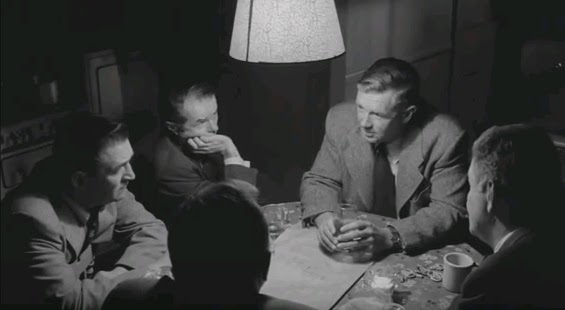
The roundtable meeting in the War Room. This is a legendary and cool set design concept.
The sequence that has risen to almost legendary status is the battle scene at the air force base, before General Ripper killed himself. This sequence demonstrated Kubrick’s craftsmanship as it was almost filmed by Kubrick himself. With the use of a hand-held camera, Kubrick has been able to film the combat scene with a sort of ‘at the spot’ feel The chaotic nature of the shootout can be promptly experienced by the audience alike, while the motto ‘Peace Is Our Profession’ was also ironically displayed at the place of the melee. The approach to this scene can be compared to the ‘cinéma vérité’ technique, which was highly popular in the 1960s and early 1970s. The impact of this sequence can still be noted nowadays – as Steven Spielberg has mentioned this sequence’s influence on ‘Saving Private Ryan’, and the sequence may also have influenced the rhythmic and dynamic aspects of many of Christopher Nolan’s films.

(1/2)

by Ed Law
2/7/2016

Film Analysis - 67

Sunday, 19 June 2016

The Killing, Part 2

Helpful advice - you do not want to mess with guys like Sterling Hayden!

The Killing - Part 2
Kubrickian approaches appeared profoundly in ‘The Killing’, and that was an important factor that made the film stands out from the average crime films from the same era. The first obvious aspect was the clinical feel that would be so familiar with the later Kubrick films. Kubrick showed the story of Johnny Clay and co. with a clinical detachment, he did not judge them, he did not provide personal observations on them. An omniscient narrator was present in the film, and he observed the action with a detachment, and often, dark and ironic humor, which would become commonplace in later Kubrick pictures. The universe these crooks found themselves situating in was at best indifferent, at worst hostile. Unlike some of the other filmmakers, who still wanted to provide a bit of hope and sunshine to the Film Noir, the world in ‘The Killing’ was an unsympathetic one, and any players could hit the wall anytime due to circumstances or intrigue. Nasty as it may be, Kubrick’s world is unfortunately a realistic one, where many of us can easily identify with even nowadays. One diversion from his later work was that the film was more dialogue-heavy than his later heightened work, which relied substantially on filmic images to convey the idea. While this approach fitted well with the Film Noir, it also made the film more humanistic, and offered a human warmth not so common in the later Kubrick films.

Sterling Hayden, who played Johnny Clay in ‘The Killing’, was the organizing symbol of the film, and, also contributed to much of the dry humor in the film. He was the prototypical Kubrickian character, and he very much reflected the worldview Kubrick offered in the film. Cold and cynical, Hayden successfully portrayed the leader of a bunch of underdogs, whose sole purpose for an ambitious heist was to survive, and escape from the harsh reality he and his fiancée found themselves in. Just like many of the later films, Kubrick had no intention to give some sort of transcendent, super-heroic personality to the audience. The characters in his films were often anti-heroic and were conveyed with a strong sense of realism.  

Chess Hustler.

Many Kubrickian motifs were also present in the ‘The Killing’. Chess, which was something Kubrick was particularly masterful at, was featured in the film. The Chess represented a complex and strategic undertaking, which was very much similar to the methodical planning of the caper. Every member was like a chess piece, and was assigned a role in the plan. They were the nut and bolt of the mechanism Johnny Clay has been meticulously devised. Someone to shoot the horse to create panic and chaos, other to pick a fight in the bar to create distractions, so that Clay could hold up the ticket office without much interference. Every move has to be carefully contemplated, and carefully executed to reach the final outcome. Indeed, it is interesting to note that, Jean-Pierre Melville, the master of French heist films, also loved to use chess as a symbol in his minimalist crime films. 

On the other hand, Kubrick's clinical precision can also be felt through the film. The omniscient narrator provided precise details, for example the time and place, when the key action regarding the heist was taking place. This allows the audience to view the unfolding of events in a detached and objective manner, analyzing the heist in their own terms.

Some of the Kubrickian motifs appear in the film, for example:

The Kubrickian perspective


The double


The cosmic joke in the Kubrickian universe

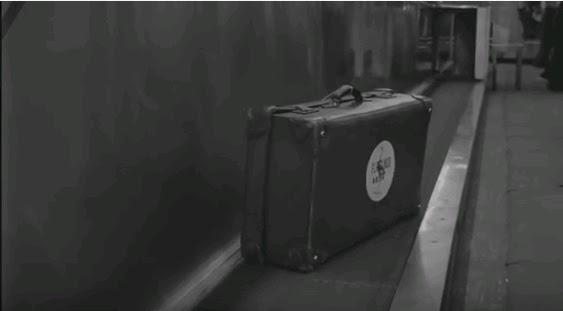
On the edge - the baggage containing Johnny Clay's loot.

Yet, one of the most genius, and indeed philosophical aspect of the whole film was its concluding part. The ordeal ended in a dark and tragic way, for which our poor anti-hero had to submit to the brutal fatalism. Johnny Clay could get away with it – when the luggage with the loot inside was proved too big for a hand baggage to board on the plane, he had to put it with the other luggage. That could still work to be honest, if not because a puppy from a casual lady went off and ran on the track, panicking the luggage cart driver and made Johnny’s luggage fall onto the track! The bombardment sent all the cash flying in the air, and Johnny was doomed. This is Kubrick’s ironic sense of dark humor, and he completely destroyed this character. This scene is very symbolic, and to me it represented two aspects of human experience. First, the scenario reminded me of John Huston’s ‘The Treasure of Sierra Madre’, released a few years before ‘The Killing’. This should not be surprising because the Huston film was one of Kubrick's favorite films (and have also inspired numerous directors including Milius, Peckinpah, Nolan and P. T. Anderson). In the film, after Humphrey Bogart’s character’s paranoid delusion almost screwed up the master plan, the locals, who retrieved the gold dust, had no idea how valuable they were, and just threw them to the air! It seemed to reflect the impermanence of life, that unpredictable things just came and things you wished to persist could even go – everything is ephemeral.


Trouble from puppy, or trouble from fate? The series of events that led to Johnny's doom.
Second, it was that the most circumstantial thing could lead to the most catastrophic outcome and destroyed everything. Johnny Clay has carefully every nuts and bolts in the right place, and though there are a few pitfalls, he was still the pawn piece standing on the chessboard. But, it was the circumstantial chain of events that made him hit the wall, a force truly beyond his control. As his fiancée urged him to escape when the authority was closing in, he uttered the classic line, ‘eh, What’s the difference?’, signifying his submission to fate. This insignificant character was ultimately destroyed by the most circumstantial event in the universe possible.  The theme of fatalism was one that could feature again in Kubrick’s films, in particular ‘Barry Lyndon’. To Kubrick, life is often a balance between determinism and circumstance, and it was intertwined in such a complicated way that the question of free will would become futile. After all, looks like Johnny and his fiancée would not be able to live happily ever after...

'Eh, what's the difference?'


Concluding Remarks

Nuts and bolts fit together to make things work, yet if one falls off, everything screws up  - especially, when that component is known as ‘fate’...


(2/2)

by Ed Law
19/6/2016

Film Analysis - 66


Saturday, 18 June 2016

The Killing, Part 1


When you are committed to give your best shot on something, how often will that be burnt to ruins due to one minor diversion? This was a question posed by Stanley Kubrick 60 years ago, through his classic film ‘The Killing’ (1956)!


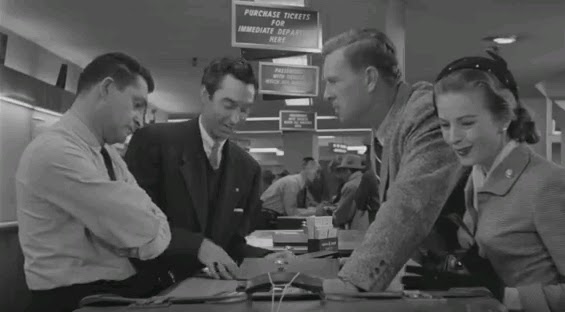
‘The Killing’ was a heist film about the planning and execution of a daring racetrack robbery, orchestrated by a bunch of underdogs with Johnny Clay (Sterling Hayden) as the leader. The meticulously planned heist went out well, yet at the end everything was destroyed either by personal intrigues or, at a darkly ironic twist, fate. I have to say Sterling Hayden was the perfect choice to star as the dark and cynical character, and of course, in the 1950s he was also the protagonist in Nicholas Ray’s ‘Johnny Guitar’. Hayden would appear again as General Jack Ripper in ‘Dr. Strangelove’, who seemed to have issues with contamination of his country men’s bodily fluids. Indeed, when Steven Spielberg was casting for ‘Jaws’ (1975), he had Sterling Hayden in mind as one of the 3 heroes to battle the shark, yet due to circumstances, the role eventually went to Robert Shaw. ‘The Killing’ was also noted for its non-linear narrative, which was not that common in the classical Hollywood era, and Quentin Tarantino has also cited ‘The Killing’ as an important  influence on his debut, ‘Reservoir Dogs’ (1992), which was also non-linear in terms of the narrative.

The gang and the plan.
One of the most stunning attributes of Kubrick’s oeuvre was that he has always been able to build on existing genre with his original touch, and in many case revolutionized the genre in question. This has indeed been happened since his earliest day, and ‘The Killing’ was a nice example to illustrate this aspect. ‘The Killing’ belongs to the genre of Film Noir, for which some commentators may consider that more as a style than a category of film. A strong sense of formalism can be easily spotted in a Film Noir, and Kubrick has made no intention to overturn the table here. Yet, he has included ‘Kubrickian’ elements into his brave attempt at the established genre, and what resulted was an original masterpiece that was very different in tone when compared to the other filmmakers of the day.

Wrong person at the wrong place?
The heist or robbery scenario, which was often termed a caper, was a very popular theme in many of the Film Noir, especially in the early 1950s. Examples ranged from John Huston’s ‘The Asphalt Jungle’ to Jules Dassin’s ‘Rififi’ and Jean-Pierre Melville’s ‘Bob le flambeur’, and many other examples followed. The heist film in the 1950s tended to follow a certain formula – which usually involved a technically-brilliant  and well-planned robbery plan, the successful execution of the crime, and often ended in a tragic way due to some humanistic factors – such as greed or betrayal. It seems that a dark ending is a necessary requirement for many of these heist films, and I have often wondered is this a morality concern or just an illustration of a pessimistic worldview?


Causing trouble or distraction?
Since these heist films could be considered as Film Noir, they often followed the standard style of the 
Noir-ish films. From a high-contrast / low key lighting scheme to the claustrophobic composition, from the depth in composition to suggest intrigue, and the chiaroscuro lighting pattern, these motifs all illustrate the ‘underdog’ status of these petty criminals and the status as the prisoners of their fate. Heist films are particularly good source for Film Noir because they also stressed the paranoia inherent in all of us. The worries that things will go wrong, and the prejudice and distrust exhibited towards the other members are often the factors that will screw up the ambitious train of fame these criminals plan to ride on.


To shoot or be shot?
In ‘The Killing’, Kubrick has adopted the aforementioned motifs so characteristic in the genre of Film Noir, and at the same time instilled his original touch to the film. Some of the techniques and motifs that would appear again and again in his later films gave their first appearance here, and it was also worthwhile to note that more experimental and non-Kubrickian techniques have also been employed. For example, the shots in the film were comparably shorter and faster cuts than his later work, which was characterized often by very protracted tracking shots and deliberate pacing. The shorter average shot length (ASL) in ‘The Killing’ was more akin to the style of Sergei M. Eisenstein and the other Russian montage pioneers, for which Kubrick has been fascinated and inspired by at the early stage of his career. Nevertheless, there were also evidences that Kubrick was experimenting sparingly with fluid tracking shot, which was most likely influenced by Max Ophuls’ ‘Lola Montes’ and his earlier work.  The shorter cut might also contribute to a more fragmented perspective experienced by the audience from the film, where the key characters were giving the own viewpoint on the heist and the matters related to that. Furthermore, the non-chronological narrative disoriented the viewer and increased the paranoia and uncertainty that could be experienced by the viewers, captivating the audience’s attention at the same time.

Solo performance - Johnny Clay's hold-up of the racetrack cashier.

(1/2)

by Ed Law
18/6/2016

Film Analysis - 66


Saturday, 11 June 2016

野良犬


自黑澤明的'野良犬'面世後, 電影世界頓時多了很多失槍事件!


'野良犬'是黑澤明在1949年拍攝的作品。四十年代末期, 正值黑色電影(Film Noir)盛行的時期, 所以此片跟夾雜前後的'酩酊天使'和'羅生門'都同時模仿當時美國和歐洲黑色電影的風格。不過, 一如天皇的其他經典般, '野良犬'對後世電影亦有極深的影響。 它可以算是第一部伙伴式電影(buddy movie), 以兩個角色的對立性格去維持戲劇的張力, 經典動作喜劇'轟天炮' (Lethal Weapon)便是好好的例子。 另外, 此片的劇情也曾被多次重拍和改進 : 杜琪峯導演的'PTU'就是一個例子。當然, 警察失槍和在有限時間裏完成艱巨任務的橋段. 也算是對'野良犬'的一種致敬吧!


故事講述年輕而缺乏經驗的警察村上(三船敏郎飾)在公共汽車上被人盗去了自己的佩槍。 他心中感到羞愧時, 又企圖自行偵查, 以便找回手槍。可惜, 疑犯利用村上的佩槍進行了一宗命案。 東窗事發後, 警方便安排資深警員佐藤 (志村喬飾)協助村上一同追捕疑犯。 佐藤經驗老到, 開始找出了一些線索。 不過, 嫌疑犯再度用村上的佩槍搶劫殺人, 而佐藤在加以追踪時不幸被疑犯槍傷!  到最後, 村上自己又能否成功破案, 找回失槍呢?


'野良犬'具代表性的原因, 除了是因為它成為後來許多電影的模範外, 黑澤明亦能夠在一個固有的電影類型中, 融和自己的風格。 這就如我接下會談的史丹利.寇比力克電影’The Killing’ (1956)一樣,  而巧合的是兩片都屬黑色電影的類别。 作為一部黑色電影, 黑澤明除了在片中突顯了道德問題所存在的灰色地帶外, 在風格的處理亦都能夠烘托出破案期間的壓迫感和侷促不安。  在空間感的調度方面 , 黑澤明採納了傳統的佈景手法, 例如把人物排置於較深的景深空間(depth of field),  又或是把兩組動作安排在同一幕 (例如雙警盤問妓女的一場戲) 。 這些手法都是四五十年代西方電影裏常見的手法, 尤其頻見於黑色電影。 因為, 這樣可以給予觀眾一種幽閉的感覺,  加深構圖的張力。 而燈光效果的安排, 光和影在幕中的排佈, 亦給予觀眾一種强烈對比的視覺感受, 這也是黑色電影裏常見的效果。


另外, 黑澤明用自己獨特的手法, 將其融入了這部犯罪電影。 黑澤明擅於用天氣去襯托人的心境和事的情態, 在'野良犬'裏, 他又一次作出了完美的示範。  由片頭的酷熱, 去刻劃主角失槍後的焦急和不安; 然後烈風預示着接腫而來的麻煩和亂子; 到了逼近危險時, 狂雨就敲擊着地上的泥濘。  山雨欲來風滿樓, 變幻莫測的天氣彷彿象徵着村上迂迴險峻的旅程, 和他慌張不安的心情。他儼如一條野犬, 生存在殘酷無憐憫的世界中, 縱使驚惶失措, 亦還要勇鬥下去...


不過片中的戲劇張力, 是兩個主角性格的強烈對比。 師徒關係, 是黑澤明電影常談及的課題。在片中, 志村喬飾演的老差骨佐藤行事老練, 頭腦冷静, 比起三船敏郎飾演的躁警村上更能看透支離的綫索。佐藤把查案推理的手法傳授給處事魯莽衝動的村上。 天氣熱得令人透不過氣來時, 才是最需要平靜如水的心境。 不過, 佐藤最具啓發性的地方, 是他一直作為村上的道德方針。當村上為求達到目的而不擇手段時, 佐藤總能從旁勸導。佐藤彷彿就如黑澤明的化身, 像’羅生門’背後的啓示一樣: 即使在一個無道德的世界, 我們亦要堅信和履行自己的道德判斷。 尤其, 當在後來佐藤倒下時, 村上被逼孤軍作戰, 要獨力面對接下來的挑戰 時, 加深了存在主義的意味。 片中其中一個令人難忘的影像, 就是當兩人在街上走着時, 牆上打着條狀的影子。 縱使這是黑色電影裏常見的拍攝手法,  影子又像把兩人囚禁了起來, 象徵着他們的身不由己。就連村上自己也體會到他和疑犯的共通之處: 大家都像在亂世中苟且生存的野犬。在無道德的國度,  正邪往往只是 一線之差。


只有保持冷静的頭腦 , 和堅持自己的道德觀, 才能迎難而上, 衝破生命的難關!

by Ed Law
11/6/2016

以戲服人 Film Analysis - 65


Sunday, 5 June 2016

The Two Faces of Stanley Kubrick

The stare (or scare?) is back!

Stanley Kubrick Series - 3

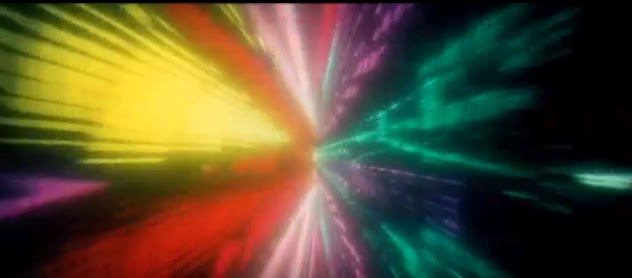
Though I have been a huge fan of Stanley Kubrick all the time, I feel rather uncomfortable to see that my blog is evolving in a ‘Kubrickian’ pace! Except I am pouring out masterpiece after masterpiece from this blog, this progress seems to be an unjustified excuse. Anyway, we are back and I will continue with my Stanley Kubrick series, along with a number of other great topics later in the year – Taxi Driver, Touch of Evil, Antonioni – to name a few at this stage. Before we drift ourselves through the Star Gate, getting enough peril and wrinkles and beyond, we have to first read the instructions!


You certainly have no idea of what you are stepping into!

I feel that it is an important point to appreciate the two diverse periods of style in Kubrick cinema. The drawing line seems to take place in 1964, when Dr. Strangelove was released. Before Kubrick offered this gift to us, his style was less consistent, though certain stylistic preference and themes have already sparingly appeared in the 5 or 6 feature films in the period from 1951-1963. This is what I would coin as a ‘non-Kubrickian’ period. Since 1964, the last 35 years of his life has seen Kubrick’s fully developed and heightened style, and the theme and stylistic motifs were extremely consistent, from the Kubrick stare to the tracking shot and reserve zoom. And that coldness Kubrick will always be remembered for – this is the period when his detractors would call him ‘clinical’, ‘impersonal’, ‘misanthropic’ or even ‘mechanical’. Yet after all, that is a better name for this wonderful style – Kubrickian. This is the style that appears from ‘2001: A Space Odyssey’ to ‘A Clockwork Orange’ to ‘The Shining’, and, if fate allows it, ‘A. I.’ and ‘Napoleon’. The films from the Kubrickian period (1964-1999) are those that have influenced dozens of filmmakers and the ones they have tried so hard to imitate. Of course, it is also the area we will spend most time on in this series!

Kubrick getting really serious with Shelley Duvall during the filming of 'The Shining'. THE Kubrick Stare.
Why is such a distinction important? Because it is too easy to assume in a retrospective manner that ‘Kubrick is God!’ and jump to quick conclusion that everything Kubrick has ever done is considered masterpiece and follows a consistent style. If we really want to understand how Kubrick has inspired the later generation, it is certainly not an objective and indeed,  misleading point of reference. At the early stage of his career, Kubrick has experimented with a number of different stylistic motifs, before evolving into a highly stylized later period (e.g. approach to actors, cinematic rhythm, technical mastery). The early period from 1950s and 1960s consisted of amateurish attempts, films that were not to Kubrick’s original intention, and even work he was personally ashamed of. Some of the films, such as ‘Paths of Glory’ and ‘Spartacus’, are truly non-Kubrickian, and I often feel ‘Paths of Glory’ is too sentimental, a label not often attached to Stanley Kubrick. 

While the films of this period were of diverse style, subtle themes have already surfaced on many of these – as those themes were the ones Kubrick has been deeply concerned with from day one. The themes of the human condition, dehumanization, and fatalism could be found in almost every Kubrick film before Dr. Strangelove. On a positive note, I also feel that these films are nice diversions from the cold and clinical Kubrickian monoliths of the later years, and they serve as windows to explore the other face of Kubrick cinema.

The Killing (1956)

Of all the films from the early Kubrick period, one particular film stands out – ‘The Killing’ (1956). This Heist-Film Noir has received a lot of attention in recent years due to the availability of the DVD version, and it is also a great window to see the early genius of Stanley Kubrick. It is special because it seems to have uncanny resemblance to the ‘Kubrickian’ feel as evident in his post-1964 films. The worldview, the motif, and the ideas behind this Sterling Hayden epic sound too familiar to his later work such as ‘A Clockwork Orange’ and ‘Barry Lyndon’, which I feel to be the most Kubrickian films  - these are the ones showing how Kubrick defines the world we find ourselves situating in. 

Off to the race track, get a rifle and a mask, withhold the puppy – next time we are doing ‘The Killing’! 

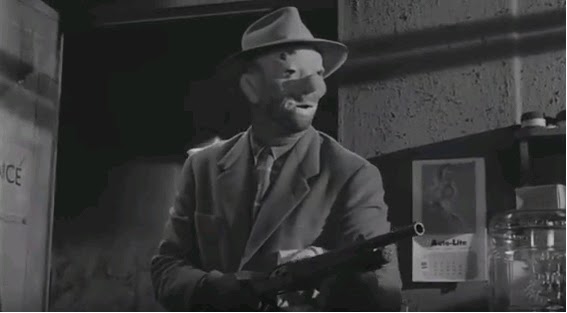
This is a hold-up : Still from 'The Killing' (1956).

by Ed Law
5/6/2016

Film Analysis - 64